Kōfu, Japan
- 187,985 people
- 18 places to visit
- 35.6621, 138.5683
Places to Visit (18)
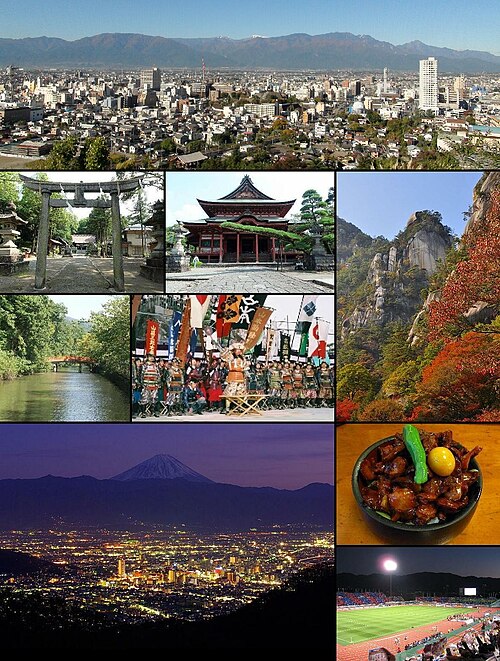
Kōfu, the capital city of Yamanashi Prefecture in Japan, is located in the mountainous Chūbu region, approximately 120 kilometers west of Tokyo. Nestled at the scenic base of the Japanese Alps, Kōfu boasts a stunning natural landscape characterized by lush greenery, rivers, and proximity to Mt. Fuji. The city serves as a vital transportation hub, strategically positioned at the confluence of major highways and rail lines, making it accessible for both residents and tourists. With a population of around 190,000, Kōfu maintains a blend of urban convenience and small-town charm, offering a unique take on Japanese culture and lifestyle.
Historically, Kōfu has significant importance, especially during the Edo period, when it served as a vital post town on the Koshu Highway, connecting Edo (modern-day Tokyo) to the region of Kai. The city is renowned for its historical sites, including Kōfu Castle, which dates back to the early 16th century and offers panoramic views of the surrounding area. Additionally, Kōfu is known for its wine production, benefiting from the region's favorable climate and soil, contributing to the burgeoning Japanese wine industry. The city hosts the Yamanashi Prefectural Museum of Art and other cultural institutions, celebrating both traditional Japanese and contemporary art. With its rich history, cultural landmarks, and scenic beauty, Kōfu presents an enticing destination for visitors seeking to explore the heart of Japan's mountainous interior.
Facts about Kōfu
- Kōfu is the capital city of Yamanashi Prefecture and is known as the 'City of Wine', hosting many wineries and vineyards that reflect the region's prosperous winemaking history.
- The city is home to the famous Kōfu Castle (Kōfu-jō), which was built in the 16th century by the Takeda clan and was restored to a park and historical site.
- Kōfu is situated in a basin surrounded by the Japan Alps, providing stunning natural scenery and a unique microclimate that is different from many other regions in Japan.
- The city is famous for its participation in the 'Yamanashi Kasutera Matsuri', or Castella Festival, celebrating the region's famous sponge cakes, a culinary delight that has deep historical roots.
- Kōfu is known for the 'Shingen-ko Matsuri', held annually in April, which celebrates the legacy of Takeda Shingen, one of Japan's most famous samurais, with parades and traditional performances.
- The city features the 'Furukawa Art Museum', a unique museum that showcases a collection of modern Western paintings and Japanese art, distinctively contributing to Kōfu's cultural landscape.
- Kōfu has a rich history as a center for silk production and trade during the Edo period, making it an important historical site for Japan's silk industry.
- Kōfu's unique location along the ancient 'Kōshū Kaidō' road made it a strategic point for travel and trade between the capital, Edo (modern Tokyo) and the west during the Edo period.
- The city is not far from the iconic Mount Fuji, often providing picturesque views and serving as a common starting point for climbers heading to Japan's most famous peak.
- Kōfu is known for its medicinal hot springs, or 'onsen', such as the Kōfu Onsen, which is less famous than others in Japan but offers a relaxing experience amidst beautiful natural surroundings.