Konya, Turkey
- 1,390,051 people
- 9 places to visit
- 37.8746, 32.4932
Places to Visit (9)
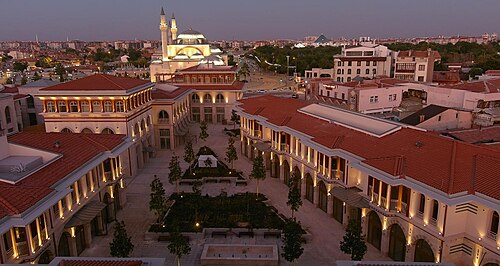
Konya, one of Turkey's largest cities, is situated in the central part of the country, approximately 240 kilometers southeast of Ankara. Known for its rich historical and cultural heritage, Konya has been a significant center for trade, education, and spirituality for centuries. Originally established as a settlement known as Iconium during Hellenistic times, it has a diverse cultural legacy, influenced by various civilizations, including the Romans, Byzantines, and Seljuks. The city became a pivotal center for the Seljuk Empire during the 12th and 13th centuries and is often regarded as the heart of Anatolian Turkish culture.
One of Konya's most notable features is the Mevlana Museum, dedicated to Jalal ad-Din Muhammad Rumi, a 13th-century Persian poet, Islamic scholar, and Sufi mystic whose teachings have gained worldwide recognition. The museum is housed in the former lodge of the Mevlevi order and attracts numerous visitors annually, especially during the Whirling Dervishes' ceremonies that celebrate Rumi’s philosophy of love and spirituality. In addition to its spiritual heritage, Konya is known for its impressive architectural landmarks, including the Alaeddin Mosque and the Karatay Medrese, reflecting the city's historical importance. The lush gardens and intricate tile work of these sites highlight the artistry of the period.
Konya's modern economy is heavily based on agriculture, manufacturing, and services, with the production of grains, pulses, and sugar being particularly significant. The city has also witnessed substantial urban development in recent years, which has transformed it into a modern urban center while maintaining its historical roots. With a population of over 2 million, Konya boasts a vibrant community that values its traditions, culinary heritage, and local arts. Significant annual cultural events, such as the Rumi Festival, further emphasize the city’s commitment to preserving its heritage while promoting its multifaceted identity in contemporary Turkey.
Facts about Konya
- Konya is known as the home of the Whirling Dervishes and is the center of Sufism in Turkey, partly due to its connection to the renowned mystic Rumi.
- The city features the Selimiye Mosque, which is an architectural masterpiece from the 16th century and showcases the beauty of Seljuk architecture.
- Konya was one of the major cities of the Seljuk Empire and served as its capital during the 12th and 13th centuries, making it rich in historical significance.
- The city hosts the Rumi Festival every December, celebrating the life and teachings of Jalal ad-Din Muhammad Rumi with dance, poetry, and music.
- Konya is one of the largest cities in Turkey by area, covering over 40,000 square kilometers, reflecting its importance in the region.
- The city has a unique culinary tradition, famous for dishes like Etli Ekmek, a type of flatbread topped with minced meat, and Tandır Kebab.
- Konya is home to the Mevlana Museum, which was once the lodge of the Mevlevi order and now serves as a significant pilgrimage site.
- The city emphasizes education and has several renowned universities, including Selçuk University, which contributes to its youthful population.
- Konya has a semi-arid climate, distinct from many coastal Turkish cities, leading to unique agricultural practices, particularly in cereal production.
- It is home to the largest city park in Turkey, the Konya Science Center, which features numerous interactive exhibits focused on science and technology.