Kraków, Poland
- 755,050 people
- 17 places to visit
- 50.0647, 19.945
Places to Visit (17)
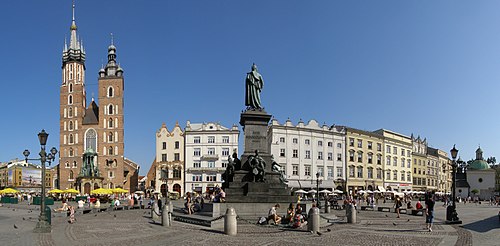
Kraków, one of Poland's oldest and most cultural cities, is a significant historical and artistic hub located in the southern part of the country by the Vistula River. Founded in the 7th century, Kraków served as the royal capital until 1596 and remains a symbol of Polish identity and heritage. The city’s well-preserved medieval core, a UNESCO World Heritage Site, features a wealth of historical landmarks including the majestic Wawel Castle, which was home to Polish kings, and St. Mary's Basilica, renowned for its stunning altarpiece created by Veit Stoss. The Main Market Square, one of the largest in Europe, is a focal point of the city, bustling with cafés, shops, and street performers, effectively capturing the spirit of Kraków.
Kraków is also known for its vibrant cultural scene, featuring numerous theaters, museums, and galleries. The city hosts various festivals throughout the year, such as the Jewish Culture Festival, celebrating the rich history of Jewish life in the region, and the Kraków Film Festival, which showcases documentary and short films from around the world. The arts and education thrive here, bolstered by institutions like Jagiellonian University, one of the oldest in Europe, where notable figures, including the astronomer Nicolaus Copernicus, once studied. In addition to its cultural significance, Kraków is a gateway to nearby attractions, including the Auschwitz-Birkenau concentration camp memorial, a poignant reminder of the Holocaust, and the picturesque Wieliczka Salt Mine, famed for its intricate salt carvings. As a destination, Kraków seamlessly blends history, culture, and modernity, making it a must-visit location for tourists and historians alike.
Facts about Kraków
- Kraków was the capital of Poland until 1596, serving as the political center of the Polish Kingdom.
- The Wawel Castle, a UNESCO World Heritage Site, is a symbol of Polish national identity and houses the Crown Jewels of Poland.
- Kraków's Main Market Square, the largest medieval town square in Europe, is home to the iconic St. Mary's Basilica and the Cloth Hall.
- The city played a significant role in Jewish history, with the historic Kazimierz district being a center of Jewish culture before WWII and now hosting vibrant Jewish festivals.
- Oskar Schindler, who saved many Jews during the Holocaust, operated his enamelware factory in Kraków, which is now a museum dedicated to World War II history.
- Kraków is home to one of the oldest universities in the world, Jagiellonian University, founded in 1364.
- The nearby Auschwitz-Birkenau concentration and extermination camp serves as a solemn memorial and museum, educating visitors about the atrocities of the Holocaust.
- Kraków hosts the annual Jewish Culture Festival, one of the largest events of its kind in Europe, celebrating Jewish heritage through music, lectures, and food.
- The city is known for its rich traditions in art and culture, hosting numerous film and music festivals, including the Kraków Film Festival and the Audio River Festival.
- Kraków's legendary dragon, Smok Wawelski, is a popular tale that attracts tourists and is visually celebrated by the dragon sculpture at Wawel Hill.