Kramatorsk, Ukraine
- 147,145 people
- 7 places to visit
- 48.739, 37.5844
Places to Visit (7)
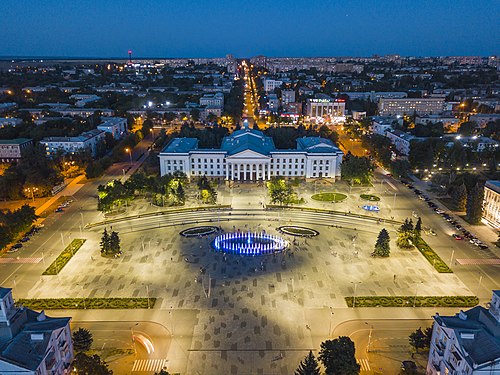
Kramatorsk is a city located in eastern Ukraine, primarily within the Donetsk Oblast, which is notably part of the larger industrial heartland of the country. Originally founded in the late 19th century as a center for the mining and manufacturing industries, Kramatorsk has played a significant role in Ukraine's industrial development. The city's current population hovers around 150,000 people, making it one of the larger urban centers in the region. Kramatorsk is strategically positioned on the banks of the Kramatorsk River and lies approximately 100 kilometers northwest of Donetsk, the regional capital.
Throughout its history, Kramatorsk has been influenced by significant historical events, especially during the 20th century. The city was targeted during World War II, and after the war, it experienced a period of rapid industrialization, featuring steel mills, machine-building plants, and a focus on heavy industry. However, the dissolution of the Soviet Union in 1991 brought economic challenges, which were exacerbated by the ongoing conflict in eastern Ukraine that began in 2014. As hostilities escalated, Kramatorsk became a focal point for military activity, particularly during the Donbas War. Despite these adversities, the city has shown resilience, with reconstruction efforts underway and a gradually stabilizing economy.
In recent years, Kramatorsk has also aimed to redefine its identity by embracing a more diversified economic base. While heavy industry remains a significant component of its economy, the city is also promoting sectors such as education, technology, and services. The presence of various educational institutions, alongside a growing community of small and medium enterprises, reflects this shift. Kramatorsk has also become a logistical hub due to its infrastructure, which includes improved transportation links and access to railways, making it vital for both regional and international trade. Alongside its ongoing development, Kramatorsk observes an active cultural life, hosting festivals and events that showcase the rich history and traditions of the local population.
Facts about Kramatorsk
- Kramatorsk was founded in 1869 as a small settlement and later became a significant industrial city, particularly known for its machine engineering and manufacturing industries.
- The city is home to one of the largest railway machine-building plants in Ukraine, the Kramatorsk Heavy Machine Building Plant, which plays a crucial role in the country's industrial output.
- Kramatorsk served as the temporary administrative center for the Donetsk Oblast during the War in Donbas, starting in 2014, when the conflict caused instability in the region.
- The city features the unique Kramatorsk Local History Museum, which showcases artifacts and exhibits that reflect the region's rich industrial heritage and history.
- Kramatorsk has a significant geological feature known as the Kramatorsk upland, which is part of the central Donetsk region, providing a notable natural landscape distinct from surrounding areas.
- The city's cultural life includes hosting the annual 'Kramatorsk Jazz Fest,' which attracts musicians and visitors from across Ukraine and beyond, celebrating jazz music.
- Kramatorsk's architecture includes a mix of Soviet-era buildings, post-Soviet constructions, and modern developments, making it an intriguing study of architectural evolution in Ukraine.
- The city has established itself as a regional educational hub, home to several higher education institutions, including Kramatorsk Institute of Economics and Humanities.
- Kramatorsk is known for its vibrant community life, which includes a variety of active local NGOs and civic initiatives focused on promoting peace and reconstruction in the region post-conflict.
- Historically, Kramatorsk was a strategic location during World War II, with significant military operations taking place in and around the city, marking its importance in Ukraine's history.