Kursk, Russian Federation
- 448,733 people
- 51.7482, 36.1947
No places available for this city.
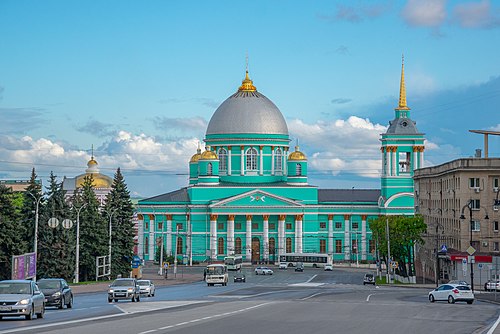
Kursk is a city in the western part of Russia, serving as the administrative center of Kursk Oblast. Situated approximately 460 kilometers (around 286 miles) southwest of Moscow, it lies at the confluence of the Tuskar River and its tributary, the Kursk River. The city has a population of about 430,000 people, making it one of the larger cities in the region. Kursk's rich history dates back to its founding in 1032, when it was established as a fort by the Kievan Rus to protect against nomadic invasions. Over the centuries, Kursk evolved into an important cultural and economic center, particularly during the times of the Grand Duchy of Lithuania and later under the dominion of the Russian Empire.
Kursk is widely recognized for its significant role in World War II, particularly during the Battle of Kursk in 1943, which was one of the largest tank battles in history and a turning point in the Eastern Front. The battle involved massive forces from both the German and Soviet armies and ended in a decisive Soviet victory, contributing to the broader Soviet offensive that would eventually push German forces out of the country. Today, Kursk honors this tumultuous past with various memorials and museums dedicated to the events of the war. The city also boasts several cultural attractions, including the Kursk State Drama Theater, numerous churches, and parks that emphasize its historical and modern significance.
The economy of Kursk is diverse, with key industries including machinery, food processing, and chemical production. The city’s industrial sector has grown steadily, and it serves as a hub for the agricultural output of the surrounding region, which is known for its fertile soil. Additionally, Kursk is home to several educational institutions, enhancing its status as a center for learning in the region. In recent years, efforts have been made to improve infrastructure and promote tourism, focusing on the city's natural beauty and historical landmarks. Overall, Kursk combines a rich historical legacy with ongoing economic development, making it an essential part of the Russian Federation’s cultural and industrial landscape.
Facts about Kursk
- Kursk is known for the Battle of Kursk in 1943, one of the largest tank battles in history during World War II.
- The city is home to the Kursk Magnetic Anomaly, one of the largest iron ore deposits in the world.
- Kursk has a rich historical significance as it was one of the key cities in the Slavic territories during the 12th century.
- The Kursk Root Icon of the Mother of God is one of the most revered religious icons in Russia, associated with miraculous events.
- Kursk hosts the annual Saltykov-Shchedrin Literary Festival, celebrating literature and arts in the region.
- The city features the Kursk State Regional Museum, which houses a vast collection of archaeological and ethnographic exhibits.
- Kursk is recognized for its impressive Orthodox churches, including the Ascension Cathedral, noted for its beautiful architecture.
- The city played a crucial role in the Russian Civil War and has many historical monuments dedicated to this period.
- Kursk was the first city in the Soviet Union to create a permanent local television transmission in the 1950s.
- Kursk boasts a unique geographical location, serving as a transportation hub connecting western Russia to Ukraine.