Kütahya, Turkey
- 185,008 people
- 7 places to visit
- 39.42, 29.9857
Places to Visit (7)
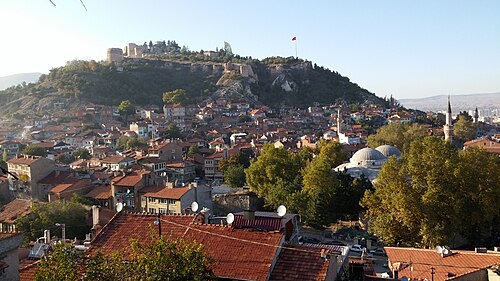
Kütahya is a city located in western Turkey, serving as the administrative center of Kütahya Province. Situated in the Aegean region, the city is approximately 300 kilometers west of Ankara and 200 kilometers northeast of İzmir. Known for its rich history that dates back to ancient times, Kütahya has been inhabited since the Phrygian period and has witnessed the rise and fall of several civilizations, including the Phrygians, Romans, Byzantines, and Ottomans. The city's historical significance is evident in its numerous archaeological sites, such as the ruins of Aizanoi, an ancient city that features a well-preserved theater, temples, and a unique ancient marketplace.
Kütahya is renowned for its ceramics and tile production, which have been a hallmark of the city's culture for centuries. The distinctive Kütahya pottery is characterized by intricate designs and vibrant colors, reflecting both traditional and contemporary artistic influences. The city hosts several ceramic workshops and factories, drawing visitors interested in the craft. Beyond its artisanal heritage, Kütahya is also known for its thermal springs, contributing to its reputation as a health tourism destination. These thermal baths, such as the Gediz and Simav springs, are believed to have therapeutic properties and attract both local and international tourists seeking relaxation and wellness.
In terms of demographics, Kütahya has a diverse population that predominantly consists of ethnic Turks, along with small communities of Kurds and other groups. The city's economy is primarily driven by industry, agriculture, and tourism, with significant contributions from natural resource extraction, particularly lignite coal and minerals. Kütahya plays an important role in regional trade, given its strategic location that facilitates access to both the Aegean and Marmara regions. Education is prominent in the city, supported by Kütahya Dumlupınar University, which offers various academic programs and fosters research and development. Overall, Kütahya stands out for its blend of historical significance, cultural richness, and economic potential, making it an intriguing destination in Turkey.
Facts about Kütahya
- Kütahya is renowned for its traditional pottery and ceramics, which date back to the early Ottoman period, making it a significant center for Turkish craftsmanship.
- The region has a rich history dating back to Hittite and Phrygian civilizations, and Kütahya has been an important center for various cultures, including the Roman and Byzantine empires.
- Kütahya is home to several historic mosques, including the Ulu Mosque, built in 1438, which is an excellent example of early Ottoman architecture.
- The city hosts the Kütahya Tile and Ceramic Museum, showcasing its long tradition of tile and ceramic art, including beautiful examples from the Ottoman period.
- Kütahya is known for its thermal springs and spa resorts, drawing visitors for health and wellness treatments thanks to the mineral-rich waters found in the region.
- The city has hosted numerous significant events, including the Kütahya International Festival of Culture and Art, which celebrates local traditions and arts.
- Kütahya is strategically located near the ancient cities of Aizanoi and Domanic, which adds historical significance to the region, attracting tourists interested in archaeological sites.
- The city produces a unique variety of tea called 'Kütahya Çayı,' which is a popular local beverage that differs from the more widely known Turkish tea.
- Kütahya is also famous for its rich rug weaving tradition, producing carpets that are celebrated for their intricate designs and quality craftsmanship.
- The local cuisine includes unique dishes such as 'Kütahya Tava,' a special type of meat dish that uses regional spices and cooking techniques, distinguishing it from other Turkish cuisines.