Kyzylorda, Kazakhstan
- 354,800 people
- 2 places to visit
- 44.8488, 65.4823
Places to Visit (2)
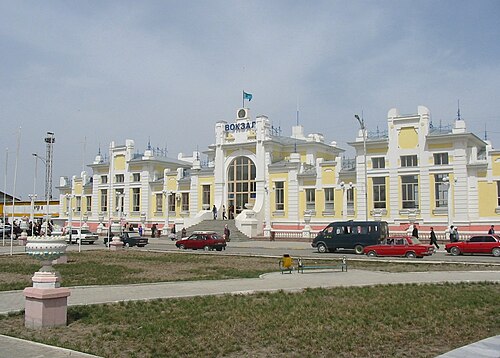
Kyzylorda is a prominent city situated in southern Kazakhstan, serving as the administrative center of Kyzylorda Region. Established in the mid-19th century, Kyzylorda was originally named Akmolinsk before being renamed to Kyzylorda in 1925. The city is strategically located along the Syr Darya River, about 2,000 kilometers from Almaty, the former capital of Kazakhstan, and approximately 800 kilometers from the current capital, Nur-Sultan. The city is known for its rich cultural heritage and plays a vital role in the region’s economy, primarily through agriculture, industry, and transportation.
The economy of Kyzylorda is diverse, with significant contributions from the agricultural sector, particularly cotton farming, which has historically been a cornerstone of the local economy. Additionally, the city hosts various industries, including food processing, textile manufacturing, and industrial enterprises that support the regional economy. The presence of natural resources, notably oil and gas reserves in the surrounding area, has also spurred economic growth and attracted investment. Kyzylorda is a key logistics hub due to its position along major transportation routes, facilitating trade and connectivity within Kazakhstan and neighboring countries.
Culturally, Kyzylorda is enriched by its multi-ethnic population, which includes Kazakhs, Russians, Uzbeks, and other ethnic groups, contributing to a vibrant cultural tapestry. The city is home to several educational institutions, museums, and cultural centers that celebrate its heritage. Among its notable landmarks is the Central Mosque, a prominent architectural feature that reflects the predominant Islamic culture. The annual Kyzylorda International Festival showcases local traditions, arts, and crafts, attracting visitors from various regions. As a city that combines historical significance with contemporary development, Kyzylorda plays an essential role in Kazakhstan's social and economic landscape.
Facts about Kyzylorda
- Kyzylorda is known for being the administrative center of Kyzylorda Region, which is rich in history and culture, and serves as a key transport hub in southern Kazakhstan.
- The city was established in 1820 as a fort called Ak-Mechet, which means 'White Mosque,' and played a significant role in the Russian Empire's expansion in Central Asia.
- Kyzylorda is located near the Syr Darya River, which is one of the longest rivers in Central Asia and has historically supported trade and agriculture in the region.
- The region is famous for its cultural heritage, including traditional crafts and skills that are unique to the region, such as carpet weaving and embroidery.
- Kyzylorda is home to the ancient city of Korkyt Ata, which is associated with the legendary bard and philosopher Korkyt, and is a UNESCO World Heritage site candidate.
- The city hosts the annual 'Kyzylorda - the Land of the Great Steppe' festival, which celebrates local culture, traditions, and the achievements of its residents.
- Kyzylorda has a significant oil and gas industry, contributing to Kazakhstan's energy resources, and is known for the 'Kazakhstan Petrochemical Industries' development.
- The city is home to several universities and institutions, promoting education and innovation in various fields, distinguishing it as an educational center in the region.
- Kyzylorda's climate is characterized by hot summers and cold winters, making it distinct in comparison to other Kazakh cities with more temperate climates.
- The city features unique landmarks, such as the Kyzylorda Regional Museum of Local Lore, which showcases the history and culture of the region through extensive exhibits.