La Paz, Bolivia
- 2,004,652 people
- 17 places to visit
- -16.4897, -68.1193
Places to Visit (17)
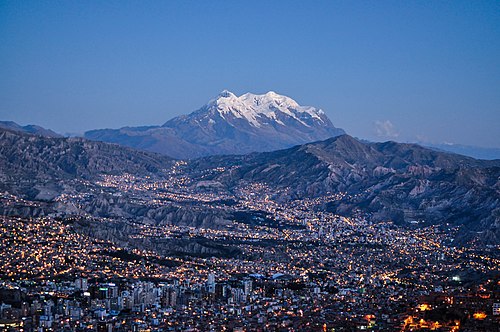
La Paz, the administrative capital of Bolivia, is notable for its unique geographical and cultural attributes. Situated at an altitude of approximately 3,650 meters (11,975 feet) above sea level, La Paz is often regarded as the highest capital city in the world. The city is nestled in a deep valley surrounded by the towering Andes Mountains, which provides a dramatic backdrop and makes for striking scenery. It serves as the political, administrative, and cultural heart of Bolivia, where numerous governmental institutions, including the presidential palace and the legislative assembly, are located. Despite its elevation, La Paz boasts a vibrant urban life characterized by a blend of indigenous heritage and modern influences, reflected in its architecture, marketplaces, and festivals.
Culturally, La Paz is rich and diverse, showcasing a mixture of Aymara and Quechua traditions alongside Spanish colonial influences. The city is home to several important landmarks, such as the Witches' Market (Mercado de las Brujas), where visitors can find a variety of traditional medicinal herbs and rituals alongside handicrafts. Additionally, the Valley of the Moon, a surreal landscape formed by erosion, is a popular tourist destination. La Paz is also an economic center, contributing significantly to Bolivia’s GDP through commerce and services. Public transport includes the city’s iconic cable car system, known as "Mi Teleférico," which connects various parts of the city and dramatically eases access by overcoming the steep topography. With a population of over 750,000 people and a broader metropolitan area that exceeds 2 million, La Paz remains a hub of socio-economic activity and cultural expression in Bolivia, making it a fascinating destination for both tourists and scholars alike.
Facts about La Paz
- La Paz is the highest capital city in the world, situated at an elevation of about 3,650 meters (11,975 feet) above sea level.
- The city's unique topography features a deep valley surrounded by mountains, making its urban layout visually striking and unlike any other city in Bolivia.
- La Paz is home to the famous Tiwanaku archaeological site nearby, which is a UNESCO World Heritage site and an important center of the ancient Tiwanaku civilization.
- The Witches' Market (Mercado de las Brujas) in La Paz is a popular tourist destination where visitors can find traditional Aymara rituals, herbs, potions, and souvenirs.
- La Paz has a unique system of cable cars known as Mi Teleférico, which is the longest and highest urban cable car network in the world, providing stunning views of the city.
- The city serves as the administrative capital of Bolivia, while Sucre is the constitutional capital, making La Paz a hub for government and international diplomacy.
- La Paz is known for its vibrant culture, featuring colorful festivals such as the Alasitas fair which celebrates the Andean tradition of wishing for wealth and prosperity.
- The San Francisco Church, a prominent landmark in La Paz, is an excellent example of mestizo architecture, blending indigenous and Spanish styles.
- La Paz boasts a diverse population, with influences from various indigenous groups, particularly the Aymara, which gives the city a unique cultural richness.
- The city is also home to the Valle de la Luna (Valley of the Moon), an otherworldly landscape filled with unusual rock formations that attract visitors from around the world.