La Rioja, Argentina
- 178,872 people
- 8 places to visit
- -29.4135, -66.8565
Places to Visit (8)
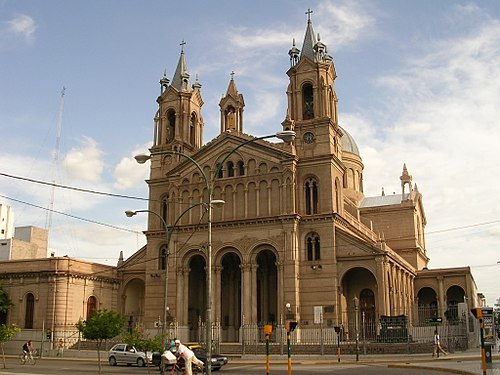
La Rioja is a province and city located in the northwest region of Argentina. It serves as the capital of La Rioja Province and is situated at the foot of the Sierra de Famatina mountain range. The city was officially founded in 1591 by Spanish explorer Juan Ramírez de Velasco and is named after the Rioja region in Spain. With a population of approximately 180,000 residents, La Rioja is known for its rich cultural heritage and historical significance, often reflected in its architecture and local traditions.
The economy of La Rioja is primarily based on agriculture, with the production of olives, grapes, and various fruits being prominent. The region is also noted for its wine production, particularly the high-quality Torrontés and Malbec varietals. In addition to agriculture, mining plays a role in the local economy, with minerals such as copper, gold, and silver being extracted. The province is endowed with diverse landscapes, including mountains, valleys, and rivers, which offer opportunities for tourism and outdoor activities. Natural attractions like the Talampaya National Park and the Parque Nacional Quebrada del Condorito contribute to the area's appeal for both locals and visitors, offering breathtaking scenery and unique geological formations.
La Rioja is characterized by a semi-arid climate, with hot summers and mild winters, making it a suitable region for agriculture and tourism. The city is also a cultural hub, hosting various festivals, including the Fiesta Nacional del Olivo, which celebrates olive harvesting and processing, as well as the wine and folklore festival. The blend of indigenous and Spanish influences is evident in the local customs, music, and cuisine, enriching the cultural landscape of the city. Overall, La Rioja is a significant part of Argentina's cultural and economic framework, with a deep historical background and a landscape that showcases both natural beauty and agricultural productivity.
Facts about La Rioja
- La Rioja is known for its rich cultural heritage, particularly in the folklore and music genres, with traditional events like the Fiesta Nacional del Futbol Infantil attracting attention.
- The city is located at the foothills of the Sierra de Famatina, providing stunning mountain scenery and opportunities for outdoor activities such as hiking and mountain climbing.
- La Rioja has a significant wine production industry, particularly known for its Torrontés and Malbec wines, which distinguishes it from other wine regions in Argentina.
- The region's history is deeply rooted in indigenous cultures, and the local museums showcase artifacts and information about the native populations that lived there long before Spanish colonization.
- La Rioja was the birthplace of several notable Argentine political figures, including the influential caudillo Facundo Quiroga in the 19th century.
- The city hosts the historic San Francisco Church, whose Baroque architecture and rich history make it an important religious and tourist site.
- La Rioja has well-preserved archaeological sites, such as the Talampaya National Park, which features dramatic landscapes and fossilized remains dating back millions of years.
- The city is a pivotal point for explorations of the surrounding natural parks, including the Quebrada del Cóndor and the Sierra de Famatina, attracting eco-tourists and adventure seekers.
- La Rioja experiences a semi-arid climate, leading to unique agricultural practices and crops that are distinct from other regions in Argentina, such as almond cultivation.
- The annual Festividad de la Virgen de Loreto celebrates the patroness of La Rioja and draws large crowds, highlighting the region's deep-rooted traditions and religious significance.