Laayoune, Western Sahara
- 196,331 people
- 5 places to visit
- 27.1418, -13.188
Places to Visit (5)
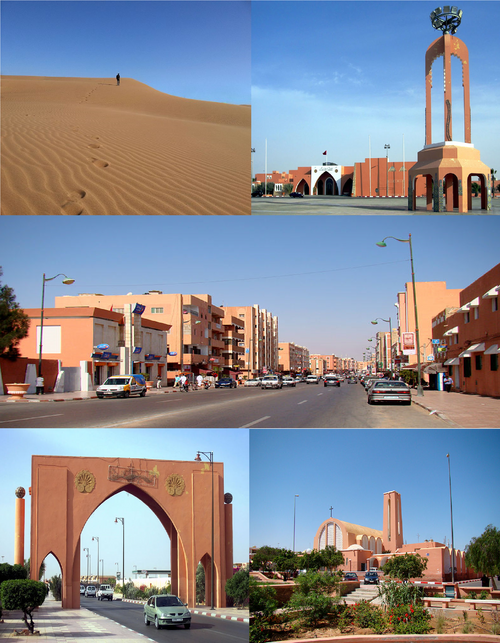
Laayoune, the largest city in Western Sahara, serves as the administrative center of the disputed territory of Western Sahara. Situated in the northwestern region of the Sahara Desert, Laayoune is strategically located along the Atlantic coast and lies approximately 1,000 kilometers from Casablanca, Morocco. The city has traditionally been inhabited by Sahrawis, the indigenous people of the region, and features a blend of cultures influenced by Berber, Arab, and Spanish traditions due to its historical colonial past. Since the 1970s, Laayoune has experienced significant demographic changes, including an influx of Moroccan settlers following the Green March in 1975, which marked Morocco's annexation of the territory.
Laayoune has developed into a city with key economic activities centered around fishing, phosphate mining, and agriculture. The region's natural resources, including large phosphate reserves in the surrounding areas, contribute to both local and national economies. Infrastructure improvements have been made in recent years, leading to the establishment of schools, hospitals, and roads that enhance the quality of life for its residents. Additionally, Laayoune has emerged as a focal point for political and social discourse surrounding the Western Sahara conflict, which has seen a prolonged dispute between the Sahrawi independence movement, represented by the Polisario Front, and Morocco. Despite this ongoing tension, the city has a vibrant cultural scene, with local festivals celebrating Sahrawi heritage and the arts, while also serving as a point of interaction between diverse communities.
In recent years, Laayoune has faced challenges related to human rights concerns, particularly regarding the treatment of Sahrawis who advocate for self-determination. International organizations have monitored the situation, emphasizing the need for dialogue to resolve the status of Western Sahara, which remains one of the last unresolved territorial disputes in Africa. As a result, Laayoune stands at the crossroads of cultural resilience, economic potential, and political complexity, making it a significant focal point within the broader context of North African geopolitics. The city's future remains uncertain, contingent upon the outcomes of ongoing negotiations and the aspirations of its diverse populations.
Facts about Laayoune
- Laayoune is the largest city in Western Sahara, serving as the region's administrative and economic center.
- The city was established in 1938 by Spanish colonial authorities and has since grown into a significant urban center.
- Laayoune is home to the largest number of Western Saharan inhabitants in the region, providing a blend of Sahrawi culture and traditions.
- The city features the iconic Laayoune Mosque, which is one of the largest mosques in the region and showcases modern Islamic architecture.
- Laayoune is strategically located near natural resources, including phosphates, which play a vital role in the local economy.
- The city hosts a vibrant market scene, where local traders sell traditional handicrafts, textiles, and spices unique to Sahrawi culture.
- Laayoune is the primary hub for international organizations and humanitarian efforts related to the ongoing Western Sahara conflict.
- Annual cultural events in Laayoune, such as the Sahrawi Festival, highlight traditional music, dance, and crafts, promoting local heritage.
- The city has a growing infrastructure, with new developments in education and healthcare that aim to improve the quality of life for its residents.
- Laayoune's coastal location near the Atlantic Ocean allows for fishing and other maritime industries, contributing to its economic diversity.