Laibin, China
- 910,282 people
- 3 places to visit
- 23.7521, 109.2224
Places to Visit (3)
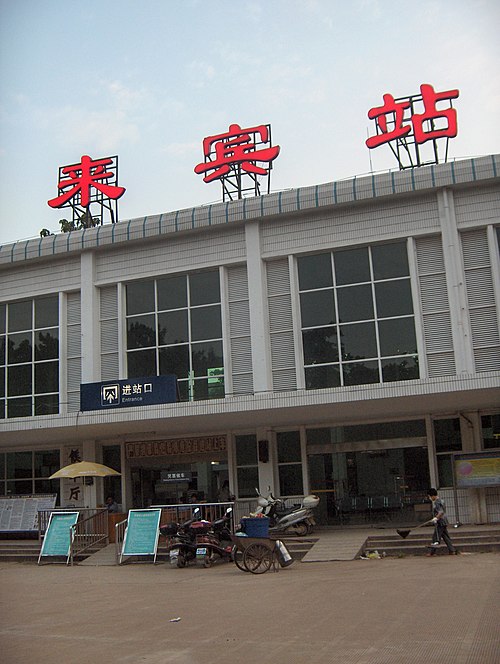
Laibin is a city located in the Guangxi Zhuang Autonomous Region of China, positioned in the southern part of the country. It serves as an important administrative and economic center within the region. Laibin's strategic location along the banks of the Gui River offers it substantial geographical advantages for transportation and trade. The city is well-connected by road and rail, facilitating the movement of goods and services to and from other major urban centers in Guangxi and beyond. Laibin covers a total area of approximately 24,137 square kilometers and has a population of around 1 million residents.
Historically, Laibin has been a hub for agriculture due to its fertile land and favorable climate, contributing significantly to the local economy. The region produces various crops including rice, maize, and sugarcane, and has developed a burgeoning agricultural industry. In recent years, Laibin has also seen growth in sectors such as manufacturing, logistics, and tourism, driven by government initiatives aimed at stimulating economic development in less industrialized regions. Attractions like the picturesque Xishan Park and scenic areas near the Yalimiao River draw visitors, highlighting the city’s blend of natural beauty and cultural heritage.
Laibin showcases a rich cultural tapestry, influenced by its diverse population, which includes both Han Chinese and various ethnic minorities. The presence of these communities contributes to the region's unique festivals, traditional crafts, and cuisines, fostering a vibrant local culture. Moreover, the city is known for its commitment to environmental protection and sustainable development, as efforts are made to balance economic growth with ecological preservation. As Laibin continues to evolve, its combination of history, culture, and economic potential positions it as a noteworthy city within the Guangxi Zhuang Autonomous Region.
Facts about Laibin
- Laibin is known for its unique geological formation called the 'Laibin Stone Forest,' which attracts tourists for its unusual rock formations.
- Laibin is home to the largest fresh water lake in Guangxi, the Laibin Reservoir, which spans over 6,500 hectares and is important for local ecology and agriculture.
- The city hosts the annual Laibin International Peasant Culture and Tourism Festival, celebrating local farming traditions and agricultural advancements.
- Laibin has a rich heritage of minority cultures, particularly the Zhuang ethnic group, which influences the city's festivals, cuisine, and traditional crafts.
- Laibin stands out with its significant number of ancient banyan trees, some of which are estimated to be over a thousand years old, symbolizing wisdom and longevity.
- Historically, Laibin served as a strategic transportation hub for trade between Guangxi and neighboring provinces due to its position along the rivers.
- The city is renowned for its production of high-quality sugarcane, contributing to Guangxi's reputation as the leading sugarcane-producing region in China.
- Laibin's climate is characterized by a subtropical monsoon, with abundant rainfall that supports flourishing agriculture, including rice and various fruits.
- The city features the historic Tashan Pagoda, which dates back to the Ming Dynasty and is an important cultural and architectural landmark.
- Laibin promotes ecological tourism through its natural parks, including the Laibin Guibei Mountain National Forest Park, offering scenic views and biodiversity.