Lansing MI, United States
- 115,056 people
- 19 places to visit
- 42.7325, -84.5555
Places to Visit (19)
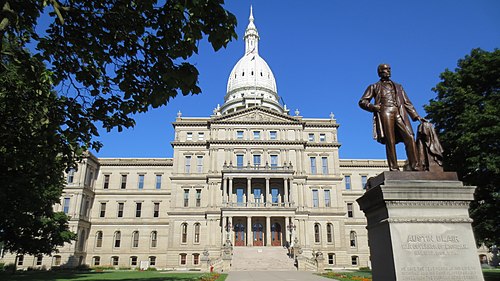
Lansing, the capital city of Michigan, is located in the central part of the state, primarily in Ingham County. Founded in 1847, Lansing emerged as a key city due to its location along the Grand River and its establishment as the state capital in 1848. The city has a population of about 116,000 residents, making it the fifth-largest city in Michigan. Its status as the state capital has led to a significant presence of government and political offices, as well as attracting various businesses and institutions that contribute to the local economy.
Lansing is known for its diverse cultural landscape and vibrant community. The city is home to Michigan State University, one of the largest universities in the United States, which adds a youthful energy and educational focus to the area. This presence has fostered a lively arts scene, with venues such as the Lansing Symphony Orchestra and the Wharton Center for Performing Arts offering a variety of performances. The city also hosts several annual events, including the Great Lakes Folk Festival and the Michigan Pride Festival, showcasing local talent and celebrating the city’s rich heritage. Lansing's economy is supported by various sectors, including government, education, healthcare, and manufacturing, with companies like General Motors and Delta Dental of Michigan having significant operations in the area.
Outdoor recreational opportunities abound in Lansing, thanks to numerous parks and the scenic riverfront, making it an attractive location for residents and tourists alike. The River Trail, a popular path winding along the Grand River, offers biking and walking opportunities, highlighting the city's commitment to green spaces. Lansing's historical architecture, including the Michigan State Capitol building—which is a National Historic Landmark—further enriches its character. As Lansing continues to grow and evolve, it maintains a unique blend of government influence, educational significance, and community spirit, making it a noteworthy city in the Midwestern United States.
Facts about Lansing
- Lansing is the capital city of Michigan, making it a significant political hub in the state.
- The city is home to Michigan State University, one of the largest universities in the United States, which greatly influences the local economy and culture.
- Lansing has a unique history as one of the few U.S. cities originally proposed by a woman, with its establishment linked to the vision of Michigan's first female landowner, Tabitha D. Edwards.
- The Michigan State Capitol in Lansing is a National Historic Landmark known for its distinct Renaissance Revival architecture and is one of the few capitols in the U.S. with a dome that resembles the U.S. Capitol.
- Lansing is recognized as one of the largest automobile manufacturing centers in the U.S. and is historically associated with the automotive industry, particularly with General Motors.
- The city hosts the annual Great Lakes Folk Festival, celebrating cultural diversity and traditional arts, which attracts thousands of visitors each year.
- Lansing features the River Trail, a 13-mile paved walkway that follows the Grand River through the city, providing recreational opportunities and promoting outdoor activities.
- In 2018, Lansing became the first city in Michigan to adopt a 'Cultural Districts' initiative to promote arts, cultural development, and economic revitalization.
- The city has a vibrant arts scene, with venues like the Wharton Center for Performing Arts and the Lansing Art Gallery, showcasing local and national talent.
- Lansing is known for its historic Old Town district, which offers a charming blend of arts, dining, and unique shops, contributing to the city’s cultural richness.