Las Palmas de Gran Canaria, Spain
- 378,517 people
- 17 places to visit
- 28.1235, -15.4363
Places to Visit (17)
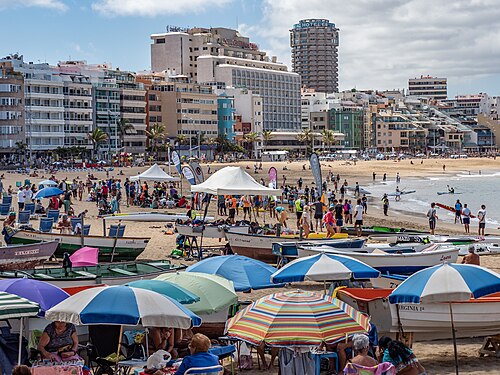
Las Palmas de Gran Canaria, the capital city of the Canary Islands and the largest municipality in the archipelago, is located on the northeastern coast of the island of Gran Canaria. Founded in 1478 by Juan Rejón, it is one of the oldest cities in Spain and has a rich history influenced by a blend of Spanish, African, and Latin American cultures. The city enjoys a subtropical climate, characterized by mild temperatures year-round, making it a popular destination for tourists seeking sun and warmth. The diverse landscape, featuring beautiful beaches such as Las Canteras and Las Alcaravaneras, alongside the vibrant urban center, contributes to its appeal.
Las Palmas is known for its cultural and historical landmarks, including the historic district of Vegueta, where visitors can explore the impressive Cathedral of Santa Ana and the Casa de Colón, a museum that celebrates Christopher Columbus's connection to the city. The city is also a hub for various cultural events and festivals, such as the Carnaval de Las Palmas, drawing both locals and visitors with its colorful parades and lively atmosphere. As an important commercial and financial center in the region, Las Palmas plays a vital role in connecting Europe and Africa and serves as a gateway to Latin America, fostering economic growth and multicultural interactions.
The local economy benefits greatly from tourism, but it also relies on sectors such as trade, agriculture, and fishing. The port of Las Palmas is one of the largest in the Atlantic and serves as a key shipping route for goods. Additionally, the city's educational institutions, including the University of Las Palmas de Gran Canaria, contribute to its reputation as a center of knowledge and innovation. Overall, Las Palmas de Gran Canaria is a dynamic city that offers a unique fusion of history, culture, and natural beauty, making it a significant destination in Spain and beyond. Its vibrant atmosphere, combined with its strategic location and diverse economic landscape, ensures that the city continues to thrive as a focal point of life in the Canary Islands.
Facts about Las Palmas de Gran Canaria
- Las Palmas de Gran Canaria is the largest city in the Canary Islands and one of the largest cities in Spain, boasting a diverse population and cultural landscape.
- The city was founded in 1478 by Spanish conqueror Juan Rejón, making it one of the oldest cities in the Americas with a continuous history.
- Las Palmas is renowned for its stunning beaches, particularly Las Canteras Beach, which is famous for its golden sands and clear waters, making it a prominent destination for water sports and sunbathing.
- The city hosts the annual Las Palmas de Gran Canaria Carnival, one of the largest and most colorful carnivals in Spain, featuring lively parades, music, and extravagant costumes.
- Las Palmas de Gran Canaria is home to the historic district of Vegueta, which is a UNESCO World Heritage site recognized for its well-preserved architecture and important historical buildings like the Casa de Colón, linked to Christopher Columbus.
- The city's strategic location as a stopover for transatlantic ships historically made it an important trading hub between Europe, Africa, and the Americas.
- Las Palmas has the only autonomous community in Spain that has a Subtropical climate, enjoying pleasant weather year-round, which attracts tourists seeking a warm escape from colder climates.
- The city is recognized for its vibrant cultural scene, hosting numerous festivals, art exhibitions, and performances, including the prestigious Canary Islands International Film Festival.
- Las Palmas is also known for the Parque de Santa Catalina, a central hub for local events and a popular meeting place with many cafes, shops, and the local market.
- The city features the Museo Elder de la Ciencia y la Tecnología, an interactive science museum that emphasizes innovation and education, making it unique in promoting science in an entertaining way.