Le Creusot, France
- 25,590 people
- 3 places to visit
- 46.8054, 4.4278
Places to Visit (3)
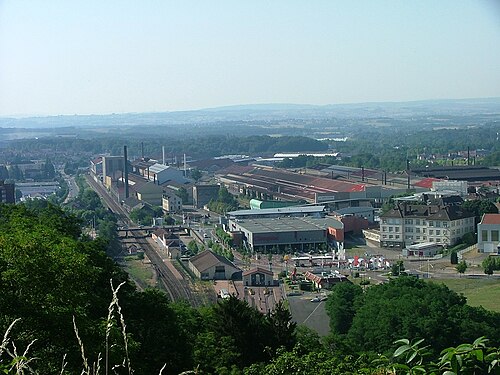
Le Creusot is a commune located in the Saône-et-Loire department in the Bourgogne-Franche-Comté region of central France. Situated approximately 30 kilometers northwest of Lyon and 18 kilometers south of Chalon-sur-Saône, Le Creusot enjoys a strategic position near the historic region of Burgundy, known for its wine production and cultural heritage. With a population of around 22,000 residents, the city's industrial background has predominantly shaped its development over the years. Historically, Le Creusot emerged as a significant industrial center in the 19th century, primarily due to the establishment of steel and coal industries, which transformed it into a bustling hub of manufacturing and innovation.
The city's industrial legacy is closely tied to the Schneider family, who founded a prominent iron and steel works in the mid-1800s. This enterprise rapidly expanded, leading to the construction of various infrastructures, including railways and bridges, contributing significantly to France's industrial growth. Le Creusot became known for producing railway locomotives, heavy machinery, and shipbuilding materials. By the late 19th and early 20th centuries, the city was synonymous with engineering excellence, attracting skilled labor and fostering technological advancements. However, as industries evolved and the demand for coal and steel decreased, Le Creusot faced economic challenges which prompted diversifications initiatives in the late 20th century.
Today, Le Creusot is marked not only by its industrial past but also by its efforts to revitalize the local economy through tourism and modern industries. The city is home to several notable landmarks, including the historic Château de la Verrerie, a former residence of the Schneider family that now houses an industrial history museum, and the Parc de la Verrerie, which offers a green space for locals and visitors alike. Additionally, the city participates in numerous cultural and sporting events, reflecting its diverse community. Le Creusot's proximity to the natural landscapes of the Morvan Regional Natural Park also presents opportunities for outdoor activities, attracting visitors interested in hiking, biking, and exploring the region's scenic beauty. As a city balancing its rich historical heritage with contemporary developments, Le Creusot continues to evolve while preserving the essence of its industrial roots.
Facts about Le Creusot
- Le Creusot is renowned for its historical role in the industrial revolution of France, particularly as a center of iron and steel production during the 19th century.
- The town is home to the famous Montceau-les-Mines, an important site for coal mining and industrial activity, which significantly contributed to the region's economy and employment.
- Le Creusot is notable for the presence of the large steelworks, known as the 'Usine de Creusot', which played a crucial role in producing notable structures, including parts of the Eiffel Tower.
- The city features a unique combination of industrial heritage and natural beauty, with parks like Parc de la Verrerie, which was originally a glass factory site that has been transformed into a public space.
- Le Creusot has a significant railway history, boasting one of the earliest railway lines in France connecting it to Chalon-sur-Saône, facilitating the movement of goods and people.
- The town is recognized for its architectural heritage, including landmarks like the Château de la Verrerie, reflecting the opulence of the local industrialists during the 19th century.
- Le Creusot is known for its innovative spirit, having attracted the attention of major engineering and manufacturing companies throughout the 20th century.
- The city hosts events such as the 'Festival de la Terre', celebrating agriculture and local produce, which highlights its connection to rural culture despite its industrial roots.
- Le Creusot has a diverse cultural scene, with institutions like the 'Musée de la Mine', dedicated to the history of coal mining and its impact on the region's development.
- The city is situated at the crossroads of the Burgundy region, providing a unique blend of industrial history and viticulture culture, making it distinct from other French towns.