Le Havre, France
- 185,972 people
- 17 places to visit
- 49.4953, 0.1011
Places to Visit (17)
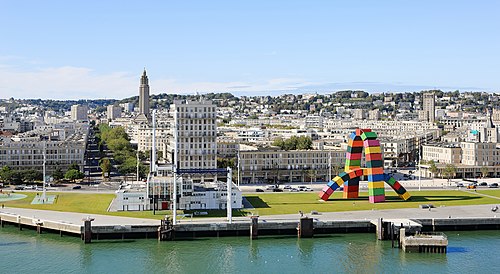
Le Havre is a prominent port city located in the Normandy region of northern France, positioned on the right bank of the Seine River estuary. Founded in 1517 by King Francis I, Le Havre was established to facilitate trade and strengthen France's maritime presence. Over the centuries, it grew rapidly due to its strategic location and became one of France's key ports, handling a significant portion of the country's export and import activities. The city played a crucial role during World War II, as it was heavily bombed and largely destroyed. Post-war efforts led to an ambitious reconstruction plan under the leadership of architect Auguste Perret, who transformed the city with innovative modernist designs, making it a UNESCO World Heritage Site in 2005.
In addition to its industrial significance, Le Havre is known for its cultural and artistic contributions. The city houses several museums, including the André Malraux Museum of Modern Art, which boasts an impressive collection of Impressionist paintings. The architecture in Le Havre reflects a mix of its historical roots and post-war modernity, characterized by concrete structures, open squares, and green spaces. The vibrant cultural scene is enhanced by various festivals, theaters, and a lively waterfront that attracts both residents and tourists. Le Havre is also an important educational hub, home to institutions specializing in maritime studies and business. With its blend of history, culture, and economic vitality, Le Havre remains a significant city in France's landscape.
Facts about Le Havre
- Le Havre is a UNESCO World Heritage site, recognized for its modernist architecture, which was developed after World War II by architect Auguste Perret.
- The city has one of the largest seaports in France, making it a crucial center for trade and maritime activities.
- Le Havre was heavily bombed during World War II, which led to its unique post-war urban planning and architecture that distinguishes it from many other French cities.
- The city is home to the MuMa (Musée d'Art Moderne André Malraux), which houses an impressive collection of Impressionist paintings, second only to the Musée d'Orsay in Paris.
- Le Havre's modernist town center is characterized by its grid layout, wide avenues, and a prominent use of concrete, differentiating it from many traditional French towns.
- The city features a striking concrete church, the Église Saint-Joseph, designed by Auguste Perret, which is noted for its towering bell tower and stunning stained glass.
- Le Havre hosts the annual Festival des Arts de la Rue, celebrating street arts and performances, which attracts artists and visitors from around the region.
- The city is noted for its vibrant cultural life, including the presence of the National Theatre, which showcases various performances throughout the year.
- Le Havre is a gateway to the Normandy region, providing access to historical sites such as the D-Day beaches and the picturesque coastal towns of Étretat and Honfleur.
- The city has a significant maritime heritage, with numerous maritime museums and historic ships that reflect its long-standing relationship with the sea.