Lens, France
- 38,265 people
- 13 places to visit
- 50.4289, 2.8318
Places to Visit (13)
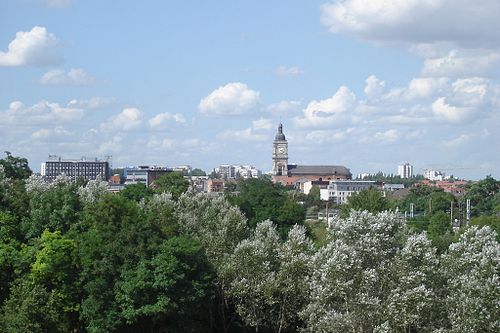
Lens is a commune located in the Pas-de-Calais department in northern France, situated approximately 38 kilometers (24 miles) south of Lille. Historically, Lens was a significant coal mining town, thriving during the 19th and 20th centuries due to its rich deposits of coal, which played a vital role in the industrial development of the region. The city’s industrial past is evident in its architecture and urban layout but also in the challenges it faced with the decline of the coal industry in the latter half of the 20th century, which prompted economic and social transformation.
In 2012, Lens gained recognition when it was designated as a “City of Art and History” and was awarded the title of a UNESCO World Heritage Site, thanks to its rich mining heritage. One of the city’s most notable sites is the Louvre-Lens Museum, a branch of the prestigious Louvre Museum in Paris, which opened in December 2012. This cultural institution showcases a wide array of artworks and provides a contemporary setting that contrasts with the historical aspects of the region, making art accessible to a wider audience. Lens is also home to other significant landmarks, including the 19th-century Saint-Theodore Church and the remains of the mining landscape surrounding the city, which offer insights into the history and culture of the area.
Sports play a prominent role in the community's identity, with the local football team, Racing Club de Lens, enjoying a passionate following and a rich history in French football. The team's stadium, Stade Félix Bollaert, has hosted numerous high-profile matches and events, including those during the 1998 FIFA World Cup and the UEFA Euro 2016. The demographic evolution of Lens, influenced by its industrial past and more recent cultural revitalization, continues to shape the city as it seeks to redefine its identity while preserving its historical roots. Today, Lens stands as a vibrant hub of cultural activity, a testament to resilience and adaptation in the face of economic changes.
Facts about Lens
- Lens is home to the Louvre-Lens Museum, a branch of the renowned Louvre in Paris, which showcases a rotating selection of masterpieces from the original museum.
- The city played a significant role in the coal mining industry and was part of the Nord-Pas-de-Calais mining basin, which is recognized as a UNESCO World Heritage site.
- Lens is known for its unique blend of French and Flemish architecture, reflecting its historical connections to the nearby Belgian border.
- The local football team, RC Lens, has a passionate following and is known for its vibrant stadium atmosphere, particularly during matches at the Stade Bollaert-Delelis.
- Lens was significantly impacted during World War I and II, resulting in numerous historical sites and memorials dedicated to the events and heroes of those conflicts.
- The city hosts the annual Lens International Festival of Short Films, highlighting new cinematic talent and fostering a love for short-form storytelling.
- Lens has a rich cultural heritage, celebrating regional traditions such as the Pas-de-Calais carnival and local food specialties like 'potjevleesch' and 'ch'ti beer.'
- As part of the Greater Lille metropolitan area, Lens benefits from its proximity to major urban centers while retaining its small-town charm.
- Lens has been selected as one of the 'Cités de l'Architecture et du Patrimoine' for its historical significance and notable architectural landmarks.
- The city is known for its vibrant public spaces, including the Place Jean Jaurès, which serves as a focal point for community gatherings and events.