León, Spain
- 134,305 people
- 14 places to visit
- 42.5984, -5.5719
Places to Visit (14)
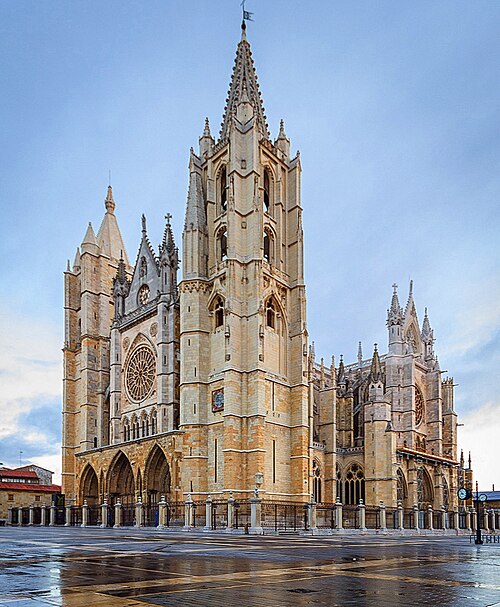
León is a historic city located in northwest Spain, serving as the capital of the province of León within the autonomous community of Castile and León. With a population of approximately 125,000, León is known for its rich cultural heritage, medieval architecture, and vibrant local traditions. The city is situated along the banks of the Bernesga River and has been a significant crossroads since ancient times, initially established as a Roman military camp known as Legio VII Gemina in the 1st century AD. Over the centuries, León has evolved into an important religious and political center, contributing to the development of the Kingdom of León in the Middle Ages, which played a crucial role in the Reconquista—the Christian reclamation of the Iberian Peninsula from Muslim rule.
The city’s architectural marvels reflect its historical significance, with the most prominent being the León Cathedral, a stunning example of Gothic architecture renowned for its remarkable stained glass windows, which date back to the 13th century. Another notable landmark is the Basilica of San Isidoro, often referred to as the "Sistine Chapel of Romanesque art" for its exquisite frescoes that depict biblical scenes. León also boasts a well-preserved medieval old town, characterized by narrow streets, traditional stone buildings, and lively plazas. The city hosts a variety of cultural events and festivals, including the Semana Santa (Holy Week) celebrations, which attract visitors from all over Spain and beyond, showcasing vivid processions and religious fervor.
Among its gastronomic offerings, León is celebrated for its culinary delights, particularly its tapas culture and specialties such as "morcilla" (blood sausage), "cebolla" (onions), and "cochinillo" (roast suckling pig). The city’s vibrant cuisine reflects the agrarian traditions of the region, making it a destination for food enthusiasts. León also has a dynamic university scene, with the University of León serving as a crucial center for education and research. Overall, León represents a blend of historical richness and modern vibrancy, making it an attractive destination for tourists and a proud home for its residents. Its unique character, shaped by centuries of history, culture, and tradition, continues to draw interest from across Spain and around the world.
Facts about León
- León is known for its well-preserved medieval architecture, including the stunning León Cathedral, which features an incredible stained-glass collection.
- The city played a pivotal role in the formation of the Spanish nation, being the site of the 1188 Cortes of León, recognized as one of the first parliamentary assemblies in Europe.
- León is home to the unique Romanesque style Basilica of San Isidoro, often referred to as the 'Sistine Chapel of Romanesque Art' due to its frescoes.
- The city is famous for its vibrant tapas culture, particularly in the historic Barrio Húmedo area, where a wide variety of delicious tapas can be enjoyed with local wines.
- León hosts the popular international film festival ‘Festival Internacional de Cine de León,’ which promotes independent cinema and attracts filmmakers from around the world.
- The city's historic center is a UNESCO World Heritage Site, recognized for its rich history and architectural heritage, distinct from other Spanish cities.
- León is also known for its parades during the popular San Juan and San Pedro festivals, showcasing traditional music, dance, and local customs.
- The 'Camino de Santiago', a famous pilgrimage route, passes through León, attracting thousands of pilgrims each year, which adds to the city's historical significance.
- León's culinary fame is highlighted by its famous local dish, 'Cecina de León,' a cured and smoked beef product that has received Denomination of Origin status.
- The city is known for its vibrant street art scene, particularly within the historic areas, which contrasts with the more traditional aesthetics found elsewhere in Spain.