León, Nicaragua
- 144,538 people
- 5 places to visit
- 12.4343, -86.8805
Places to Visit (5)
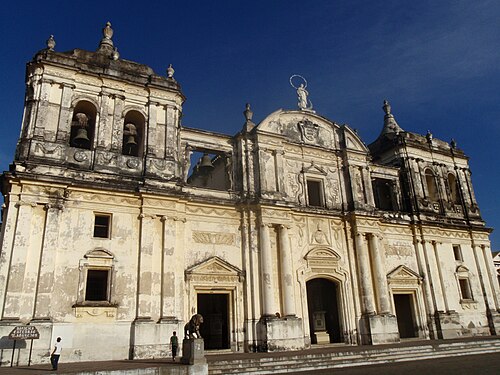
León is a prominent city located in the western part of Nicaragua, serving as the capital of León Department. Founded in 1524 by Spanish conquistador Francisco Hernández de Córdoba, it is one of the oldest cities in the country and has played a significant role in Nicaragua's history. The city is known for its colonial architecture, vibrant cultural scene, and educational institutions, including the National Autonomous University of Nicaragua at León, which contributes to its reputation as a center of learning and political activism. León was once Nicaragua's capital until 1857 when it was moved to Managua, yet the city continues to be influential in the country’s politics and culture.
Culturally, León is rich in traditions, with a plethora of festivals and religious events, including the prominent celebration of the San Jerónimo Festival, which features colorful parades and lively music. The city is also renowned for its artistic heritage, showcased in various galleries and art institutions, making it a hub for local artists. Notably, León is surrounded by natural beauty, with the Maribios Volcanoes range nearby, offering opportunities for outdoor activities such as hiking and exploring volcanic landscapes. Furthermore, the city is home to several important historical sites, such as the UNESCO-listed Cathedral of León, one of Central America’s largest cathedrals, and the ruins of the original León, now called León Viejo, which reflect the colonial past and provide insight into the early Spanish settlements. Today, León serves as a vibrant blend of history, culture, and education, inviting visitors to explore its streets filled with history and modernity alike.
Facts about León
- León is known as the intellectual and cultural capital of Nicaragua, with a rich history of literature and art.
- The city is home to the largest cathedral in Central America, the León Cathedral, a UNESCO World Heritage Site and an architectural masterpiece.
- León has a vibrant street art scene, with numerous murals that reflect the city's revolutionary past and social issues.
- The city was the site of significant revolutionary activity during the Sandinista uprising in the 1970s, which plays a crucial role in its modern identity.
- León is famous for its colonial-era buildings, featuring a mix of neoclassical and baroque architecture that attracts tourists and historians alike.
- The city hosts the annual 'Fiestas de San Juan Bautista', a lively celebration filled with parades, music, and traditional dance, distinct from other regional festivals in Nicaragua.
- León is recognized for its culinary offerings, particularly its traditional dishes such as 'gallo pinto' and 'quesillo', which reflect the local culture more than in other parts of Nicaragua.
- It has a strong academic presence, with notable institutions like the National Autonomous University of Nicaragua at León (UNAN-León), which contributes to its intellectual reputation.
- León is surrounded by several volcanoes, including the active Cerro Negro, making it a hub for adventure tourism and unique eco-tourism experiences.
- The city has a historical significance as it was the location of Nicaragua's first university, established in 1812, solidifying its legacy as a center of education.