Leverkusen, Germany
- 162,738 people
- 14 places to visit
- 51.0459, 7.0192
Places to Visit (14)
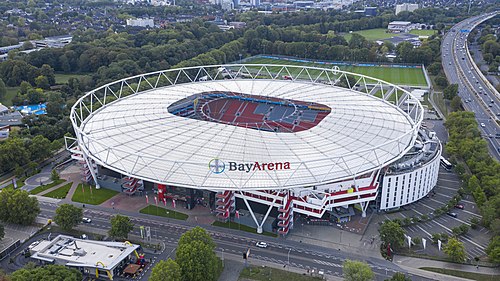
Leverkusen is a city located in North Rhine-Westphalia, Germany, situated on the eastern bank of the Rhine River. With a population of around 164,000 as of 2021, it is part of the Cologne metropolitan area, providing a blend of urban and suburban characteristics. The city was officially established in 1930, but its roots trace back to a village called Wiesdorf, which developed mainly due to the establishment of the chemical industry in the late 19th century. Leverkusen is widely recognized as a center of the pharmaceutical and chemical industries, notably as the headquarters for Bayer AG, one of the world’s largest pharmaceutical and life sciences companies.
In addition to its industrial significance, Leverkusen is known for its commitment to green spaces and recreational facilities. The city boasts several parks, such as the picturesque BayArena, home to the local football club, Bayer 04 Leverkusen. The city's architecture reflects its industrial heritage, featuring a mix of modern and historical buildings, including the stunning St. Anthony Church and the modernist Bayer premises, which showcase the company’s influence on the city’s development. Leverkusen also has cultural offerings, including museums and theaters that celebrate the city’s artistic heritage. The city's infrastructure benefits from efficient transport links, including the Leverkusen Mitte railway station, which connects it to both regional and national networks. This accessibility, combined with its industrial base and recreational opportunities, contributes to Leverkusen's reputation as a dynamic city in modern Germany.
Facts about Leverkusen
- Leverkusen is home to the Bayer AG pharmaceutical and chemical company, which significantly influenced the city's development and economy.
- The city's name is derived from the Bayer company and its founder, Friedrich Bayer, making it unique among German cities.
- Leverkusen is known for the BayArena, home to the Bundesliga football club Bayer 04 Leverkusen, which has a capacity of around 30,000 spectators.
- The city's signature landmark is the iconic Bayer Cross, a large illuminated industrial sign that can be seen from miles away.
- Leverkusen hosts the annual Bayer Leverkusen Christmas Market, which features a variety of local crafts and holiday food, attracting visitors from nearby areas.
- The city features the heavily landscaped Japanese Garden, one of the largest of its kind in Germany, providing a serene retreat and cultural experience.
- Leverkusen was the site of the first-ever synthetic dye production by Bayer in the late 19th century, marking a turning point in the chemical industry.
- The city's park, Skulpturenpark, is an outdoor museum showcasing contemporary sculptures and is unique for its integration of art within the park landscape.
- Leverkusen is geographically situated in North Rhine-Westphalia, between the cities of Cologne and Düsseldorf, making it a key transportation and industrial hub.
- The city has a rich cultural life with institutions like the Kulturzentrum, which hosts various events, exhibitions, and performances throughout the year.