Lianyungang, China
- 2,001,009 people
- 6 places to visit
- 34.5967, 119.223
Places to Visit (6)
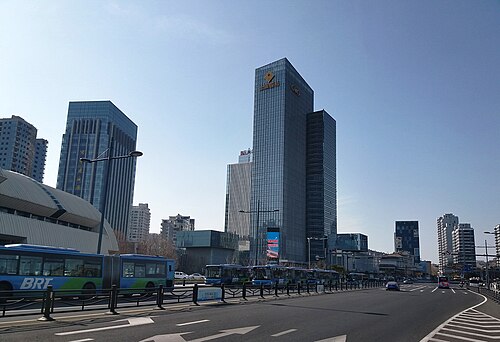
Lianyungang is a port city located in Jiangsu Province on the eastern coast of China, characterized by its strategic location along the Yellow Sea. The city covers an area of approximately 7,070 square kilometers and serves as an important economic hub in the region. With a population of about 1.5 million people, Lianyungang has undergone significant development, especially since the late 20th century, transforming it into a key player in maritime trade and transportation. Its port is one of the busiest in northern Jiangsu, serving as a gateway for goods to and from northeast China, and facilitating international trade.
Historically, Lianyungang has roots that can be traced back to ancient times, with various dynasties recognizing its importance as a coastal settlement. Today, the city blends its rich cultural heritage with modern industry, offering attractions like the Huaguo Mountain, noted for its natural beauty and cultural significance, as well as various historical sites that reflect its long-standing maritime legacy. The city's economy is diverse, incorporating sectors such as agriculture, shipping, fishing, and manufacturing. The establishment of economic zones has attracted both domestic and foreign investment, further driving development. In recent years, Lianyungang has positioned itself as a vital component of China's Belt and Road Initiative, enhancing its role as a comprehensive transportation hub and fostering international connectivity through rail and sea routes.
Facts about Lianyungang
- Lianyungang is home to the famous Huaguoshan (Hua Guo Mountain), which is linked to the classic Chinese novel 'Journey to the West' as it is believed to be the birthplace of the Monkey King, Sun Wukong.
- It has one of the largest deep-water ports in China, Lianyungang Port, which plays a significant role in international shipping and trade as part of the Belt and Road Initiative.
- The city is recognized for its unique geographical location, where the Yellow Sea meets the East China Sea, making it a key maritime gateway in northeastern China.
- Lianyungang is known for its rich mineral resources, including one of the largest reserves of potassium in the world, leading to significant contributions to the fertilizer industry.
- The city is also distinguished by the presence of the Lianyungang Nuclear Power Plant, which is one of the first nuclear power facilities in Jiangsu province.
- In 2019, Lianyungang hosted the 3rd International Tea Culture Festival, celebrating its historical significance in tea production and trade in China.
- Lianyungang features the Gulangyu Island, which is famed for its beautiful natural scenery and is recognized as a UNESCO World Heritage site for its colonial architecture.
- The city has a history dating back over 2,500 years, making it one of the oldest settlements in the Jiangsu province with notable historical sites such as the ancient Confucian Temple.
- Lianyungang is also famous for its various natural hot springs, attracting visitors looking for relaxation and wellness experiences.
- One of its landmarks, the Lianyungang East China Sea Park, is notable for its coastal scenery, offering scenic views and recreational opportunities unique to the region.