Lille, France
- 234,475 people
- 17 places to visit
- 50.6292, 3.0573
Places to Visit (17)
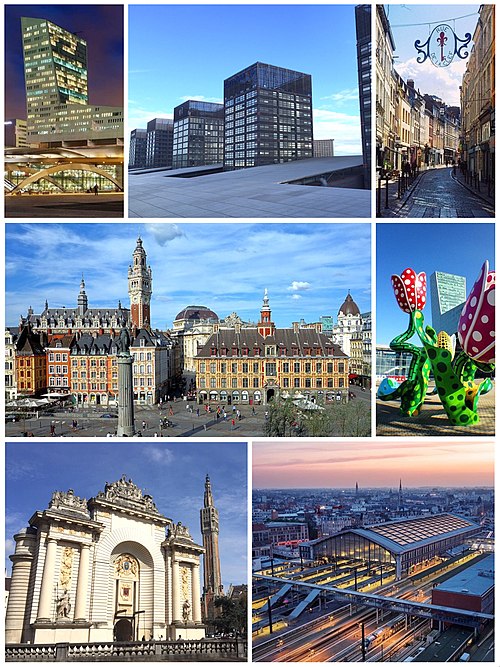
Lille is a dynamic city located in northern France, serving as the capital of the Hauts-de-France region and the Lille Métropole urban area. With a population of around 230,000 in the city itself and approximately 1.2 million in the metropolitan area, Lille stands as one of the largest urban centers in the country. Its strategic position near the borders of Belgium and the proximity to major European cities such as Paris, Brussels, and London facilitate its importance as a commercial and cultural hub. The city's history dates back to the Middle Ages, and it has been shaped by a variety of influences, including Spanish, Flemish, and French, which is reflected in its architecture and cultural heritage.
The city's historical core is known for its well-preserved architecture, featuring a mix of Gothic, Flemish, and Art Deco styles. Key landmarks include the Palais des Beaux-Arts, one of the largest fine arts museums in France, and the Grand Place, which is surrounded by stunning buildings like the Vieille Bourse, a former stock exchange that epitomizes Renaissance architecture. Lille is also renowned for its vibrant street life, bustling markets, and culinary scene, with specialties such as "carbonnade flamande," a beef stew, and "gaufres," or waffles. The city hosts various cultural events, including the annual Braderie de Lille, a massive flea market that attracts millions of visitors.
Education and innovation are vital components of Lille's identity, with several prestigious institutions, including Lille University and Centrale Lille. The city is also a focal point for research and development, contributing to sectors such as technology, healthcare, and design. Lille's economy is further bolstered by its status as a transport hub, featuring a comprehensive railway network and access to the Eurostar high-speed train service, which connects it directly to London. The combination of its rich history, cultural vibrancy, and economic dynamism makes Lille a unique and attractive destination for both residents and visitors alike.
Facts about Lille
- Lille is known for its vibrant Flemish heritage, which is reflected in its architecture, languages spoken, and local culture, distinguishing it from other French cities.
- The city is home to the Palais des Beaux-Arts, one of the largest fine arts museums in France, showcasing a vast collection that rivals the Louvre.
- Lille was designated as the European Capital of Culture in 2004, highlighting its significance in the arts and cultural events across Europe.
- The city's historic Old Town, called Vieux-Lille, features narrow cobblestone streets and colorful buildings, showcasing a mix of Gothic and Baroque architecture that sets it apart from many other French cities.
- Lille has a strong connection to the textile industry, having been a major wool production center in the 19th century, a unique aspect of its industrial history in France.
- The annual Braderie de Lille is the largest flea market in Europe, attracting millions of visitors every September, and is a unique event not found in other French cities.
- Lille's geographical location near the borders of Belgium and the Netherlands has made it a cultural crossroads, influencing its cuisine, traditions, and language.
- The Citadel of Lille, built in the 17th century by the famed military engineer Vauban, is a UNESCO World Heritage site and is an exceptional example of military architecture.
- Lille is famous for its culinary delights, including 'Welsh' (a cheese dish), 'Carbonnade Flamande' (a beef stew), and its local beers, which reflect the city's unique regional flavors.
- The city has a strong student population due to several prominent universities, including Lille 1 and Lille 3, contributing to its vibrant and youthful atmosphere, setting it apart from many other cities in France.