Liverpool, United Kingdom
- 864,122 people
- 19 places to visit
- 53.4084, -2.9916
Places to Visit (19)
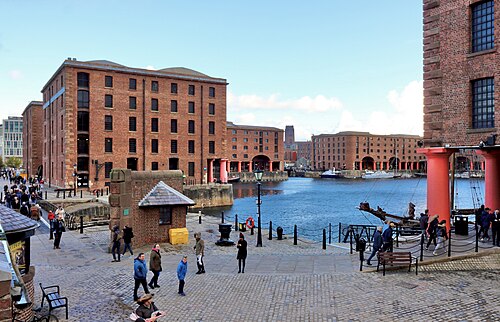
Liverpool, located in northwest England, is a vibrant city known for its rich cultural heritage and historical significance. It lies along the eastern side of the Mersey Estuary and has been a key port city since the 18th century, playing a pivotal role in international trade and the British Empire. The city’s rich maritime history is encapsulated in its UNESCO World Heritage Site status, which highlights landmarks such as the Albert Dock, a popular attraction that houses museums, galleries, shops, and eateries. Liverpool’s maritime past also includes the Cunard Building, which served as the headquarters for one of the world’s most famous shipping lines. The Port of Liverpool, once the largest in the UK, was integral to the transatlantic slave trade and later became a primary point of entry for immigrants arriving in America.
In addition to its historical and economic significance, Liverpool is widely recognized for its cultural contributions, particularly in music. The city is famously known as the birthplace of The Beatles, one of the most influential bands in history. The legacy of The Beatles is celebrated in various museums and attractions, including The Beatles Story exhibition and the iconic Cavern Club. Liverpool’s music scene extends beyond the Beatles, with influences in various genres such as rock, pop, and classical music, solidified by its designation as a UNESCO City of Music in 2015. The city is also home to a thriving arts scene, featuring institutions such as the Tate Liverpool and the Liverpool Philharmonic Orchestra. Furthermore, Liverpool has a rich sporting culture, with its two major football clubs, Liverpool FC and Everton FC, both having passionate fanbases and a long-standing rivalry.
Liverpool has undergone significant regeneration in recent years, revitalizing its city center and waterfront. The arrival of modern developments alongside historical architecture has created a dynamic urban landscape. The city also hosts numerous annual events and festivals, attracting visitors from around the globe, contributing to its status as a key destination in the UK. As a hub of innovation, creativity, and history, Liverpool continues to evolve while retaining its unique character and identity.
Facts about Liverpool
- Liverpool is the birthplace of The Beatles, one of the most influential bands in music history.
- The city is home to the Royal Albert Dock, the largest collection of Grade I listed buildings in the UK.
- Liverpool has two cathedrals: the Anglican Cathedral, which is the largest in the UK, and the Metropolitan Cathedral, known for its unique modern design.
- Liverpool's maritime history is significant, as it was a major port and is recognized as a UNESCO World Heritage Site.
- The city has hosted the largest mass participation event in the world, the Liverpool Santa Dash, attracting thousands of participants each year.
- Anfield Stadium, the home of Liverpool Football Club, has a capacity of over 54,000 and is known for its passionate fanbase.
- The city boasts the oldest surviving music hall in the UK, the Liverpool Philharmonic Hall, which opened in 1840.
- Liverpool was the first city in the UK to have an officially recognized Chinatown, which includes the biggest Chinese arch outside of China.
- The Liverpool Museums comprise the largest collection of museums and galleries in the UK outside London, including the Tate Liverpool.
- The city was named the European Capital of Culture in 2008, celebrating its cultural contributions and vibrant arts scene.