Lu’an, China
- 1,644,344 people
- 2 places to visit
- 31.7349, 116.5232
Places to Visit (2)
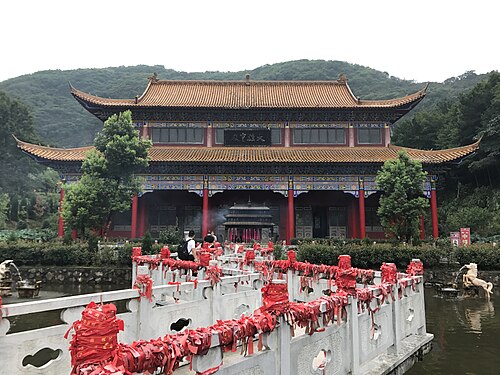
Lu’an is a city located in the southwestern region of Anhui province in China. It serves as the administrative center of Lu’an City, which was established in 1998 by combining several existing counties. The city has a rich history that dates back to ancient times, with evidence of human settlements and cultural development for thousands of years. Lu'an lies in a strategically significant area, surrounded by mountains and rivers, contributing to its scenic landscapes and agricultural productivity. As of the latest census, Lu'an has a population of over 2 million people, reflecting the urbanization trends seen throughout China.
Economically, Lu’an has diversified significantly, transitioning from traditional agriculture to a more industrial and service-oriented economy. The region is known for its production of coal, textiles, and machinery, capitalizing on its natural resources and labor force. Additionally, the local government has invested in infrastructure improvements and technology to attract businesses and foster economic growth. Agriculture remains vital to the local culture and economy, with rice, wheat, and various fruits being significant crops. In recent years, Lu’an has also promoted tourism by highlighting its cultural heritage, including historical sites and natural attractions, such as Mount Huangshan, which is a UNESCO World Heritage Site located nearby.
Culturally, Lu’an is recognized for its diverse array of traditions and practices, influenced by the broader Anhui culture. The city is home to several renowned schools of Chinese opera, particularly Huaguxi, which reflects the region's rich performing arts heritage. Important festivals, such as the Lantern Festival and the Mid-Autumn Festival, are celebrated with fervor, showcasing local customs and cuisine. With its combination of economic potential and cultural significance, Lu’an offers a unique glimpse into both traditional and modern China, making it an interesting city within the nation's vast landscape.
Facts about Lu’an
- Lu'an is known for its unique geological structures, particularly the Huangtu plateau, which features loess landforms that are prominent in the region.
- The city is famous for its traditional Huichuan opera, a local form of Chinese opera that has distinct cultural roots in the area.
- Lu'an has several ancient relics, including the well-preserved ruins of the Wanfeng Temple, which date back to the Tang Dynasty.
- The city is home to the famous Fozu Peak, known for its breathtaking natural scenery and is a popular spot for hiking and photography.
- Lu'an is recognized as a center for bamboo cultivation and production, contributing significantly to China's bamboo industry.
- The city celebrates the Lu'an International Tea Cultural Festival, highlighting its rich tea culture that dates back centuries.
- Lu'an is historically significant as the birthplace of the 'Lu'an Declaration' during the Chinese Revolution, marking a pivotal moment in the region's history.
- The city has several historical memorials, including those honoring contributions to China's modernization from early revolutionary figures and scholars.
- Lu'an is also known for its diverse agricultural products, especially millet and rice, which are major staples in local cuisine.
- The area around Lu'an is rich in mineral resources, including coal and magnesium, making it an important industrial center in Anhui Province.