Lubin, Poland
- 77,532 people
- 9 places to visit
- 51.3977, 16.2096
Places to Visit (9)
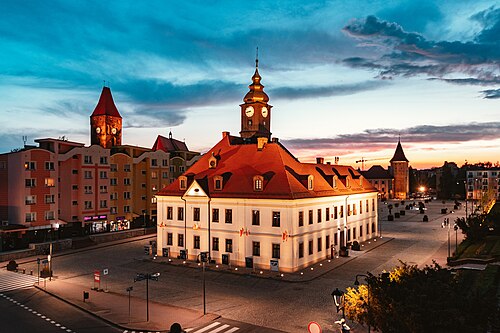
Lubin is a town located in southwestern Poland, within the Lower Silesian Voivodeship. It lies near the banks of the Kaczawa River and serves as a significant urban center in the region. The town's history dates back to the 12th century, and it has evolved through various phases, including significant developments in the Middle Ages and notable growth during the industrial era. Lubin is often recognized for its rich historical heritage, evidenced by the remnants of medieval architecture and establishments. The town is also well-known for its connection to copper mining, which became a cornerstone of its economy in the 19th century. The presence of the KGHM Polska Miedź, one of the world's largest copper companies, further highlights the importance of this industry to the local economy.
In addition to its industrial background, Lubin features a mixture of modern urban development and preserved historical sites. The town has invested in infrastructure and amenities to improve residents' quality of life, making it a desirable place to live. Lubin offers a variety of recreational facilities, parks, and cultural events, promoting community engagement and tourism. The town also emphasizes education, housing several institutions, including primary and secondary schools, contributing to a well-educated populace. With a population of around 20,000 residents, Lubin strikes a balance between small-town charm and the conveniences of a modern urban center, making it an interesting location for both visitors and potential residents. Its strategic location, combined with its industrial capabilities and historical significance, makes Lubin a noteworthy part of Poland's rapidly evolving urban landscape.
Facts about Lubin
- Lubin is renowned for its rich copper mining history, being one of the key centers of mining in Poland, particularly the Legnica-Glogow Copper Basin.
- The city is home to the Imperial Castle of Lubin, a historic fortress that showcases Gothic and Renaissance architectural styles, distinguishing it from many other Polish towns.
- Lubin hosts the 'Lubin Jazz Festival', which attracts musicians and jazz enthusiasts from across the country, highlighting the city's cultural contribution to the arts.
- The town features a unique balance of modern urban design and historical architecture, with the Lubin Main Square being a vibrant hub for local events and markets.
- Lubin is part of the larger Wrocław agglomeration, giving it a strategic position for business and economic growth in southwestern Poland.
- Notably, Lubin is the birthplace of the Polish professional football club KGHM Zaglebie Lubin, recognized for its contributions to Polish football history.
- The city underwent significant reconstruction and modernization post-World War II, transforming its landscape and public spaces in ways distinct from many other Polish cities.
- Lubin is surrounded by scenic landscapes and offers various recreational activities, including hiking and cycling paths, which are less common in the more industrialized cities of Poland.
- The city is known for its vibrant community life and various local festivals, including cultural events that celebrate both Polish heritage and contemporary influences.
- Lubin has a strong educational presence, featuring institutions that focus on technical and vocational training, catering to the needs of the region's industries.