Lublin, Poland
- 360,044 people
- 18 places to visit
- 51.2509, 22.5747
Places to Visit (18)
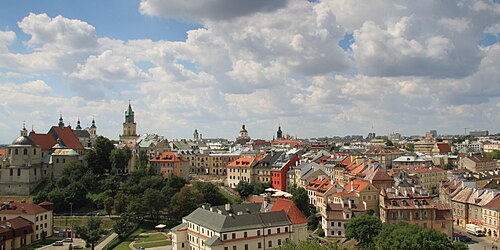
Lublin, the largest city in eastern Poland and the capital of the Lublin Voivodeship, is a prominent cultural and academic hub with a rich history that dates back over a thousand years. Situated on the banks of the Bystrzyca River, Lublin has played a vital role in the region’s socio-economic development, serving as a key trade center due to its favorable location along important trade routes between the East and West. The city has been subject to various political influences and has witnessed numerous historical events, contributing to its diverse cultural tapestry. One of the most significant moments in its history is the Union of Lublin in 1569, which resulted in the formation of the Polish-Lithuanian Commonwealth, a significant political entity in Europe at that time.
Lublin's architecture reflects its historical significance, featuring a blend of Gothic, Renaissance, and Baroque styles. The Old Town, with its cobbled streets and well-preserved buildings, is a major attraction, showcasing landmarks such as the Lublin Castle, which dates back to the 12th century and now houses a museum. The city is also known for its lively cultural scene, hosting numerous festivals and events, including the culturally rich Carnaval, which celebrates the diverse heritage of the region. In addition to its historical charm, Lublin is home to several educational institutions, including the prestigious Catholic University of Lublin and the University of Life Sciences, attracting students from across the globe. With its vibrant history, educational significance, and cultural richness, Lublin continues to play an essential role in Poland's regional and national identity.
Facts about Lublin
- Lublin is known for its unique multicultural heritage, having been a melting pot of Polish, Jewish, Armenian, and Ukrainian cultures over the centuries.
- The Majdanek concentration camp, located just outside Lublin, is one of the best-preserved Nazi concentration camps in Europe and serves as a memorial and museum.
- Lublin is home to the stunning Royal Castle, which dates back to the 12th century and has served various purposes throughout history, including as a royal residence and a prison.
- The city hosts the major academic institution, Maria Curie-Skłodowska University, named after the renowned scientist born in Warsaw, which significantly contributes to the city's vibrant student life.
- Lublin’s Old Town boasts a unique combination of Gothic, Renaissance, and Baroque architecture, making it a UNESCO World Heritage Site candidate.
- The Lublin Open Air Village Museum showcases the traditional rural architecture and lifestyle of the region, highlighting the local folklore and crafts of Eastern Poland.
- Each summer, Lublin hosts the Carnaval Sztukmistrzów, an arts festival celebrating street performers and entertainment, reinforcing the city's lively cultural scene.
- Lublin was the site of the Union of Lublin in 1569, a historic agreement that united the Kingdom of Poland and the Grand Duchy of Lithuania into one state.
- The city has a rich tradition of brewing beer, with the Lublin Brewery operating since the 19th century and contributing to the regional economy and culture.
- Lublin’s rich Jewish history is commemorated through several preserved synagogues and the establishment of the Grodzka Gate—NN Theatre, which promotes Jewish culture and heritage.