Luckenwalde, Germany
- 21,616 people
- 9 places to visit
- 52.0918, 13.1738
Places to Visit (9)
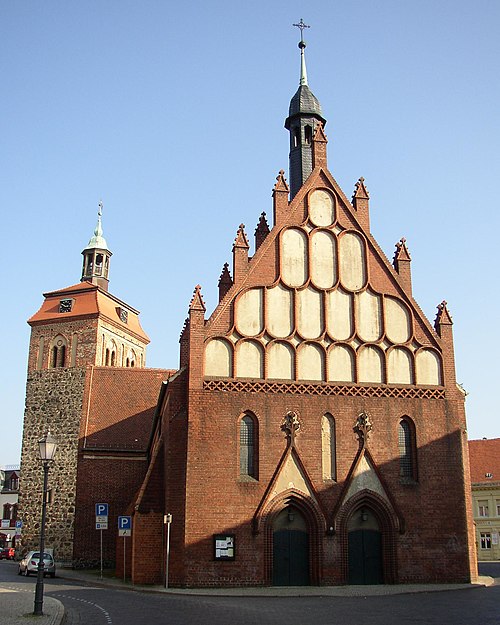
Luckenwalde is a town situated in the state of Brandenburg, Germany. Located approximately 50 kilometers (about 31 miles) southwest of Berlin, it is part of the Teltow-Fläming district. The town's history dates back to the late medieval period, with its first documented mention occurring in 1347. Originally a small settlement, Luckenwalde grew in prominence due to its strategic location along the Berlin–Halle railway, which facilitated trade and transportation in the region. Over the centuries, it developed a diverse industrial base, predominantly known for textile manufacturing in the 19th century and various industries in the 20th century, including machinery and construction.
Luckenwalde is characterized by its mix of historic architecture and modern amenities. The town features several well-preserved buildings from different periods, including the St. Mary’s Church (St. Marienkirche), a notable example of Gothic architecture, and remnants of the town's medieval town wall. Another significant structure is the historic post office, which exemplifies the architectural styles prevalent during the town’s industrial boom. In addition to its architectural heritage, Luckenwalde is surrounded by picturesque landscapes, making it appealing for outdoor activities such as hiking and cycling. The town is also home to various cultural and recreational facilities that cater to its residents and visitors, including sports clubs and community events that foster a sense of local identity.
In recent years, Luckenwalde has garnered attention for its efforts toward modern urban development while preserving its historical character. The local government has implemented initiatives aimed at improving infrastructure and promoting sustainable living, which resonate with the region's ecological focus. With its proximity to Berlin, Luckenwalde has also emerged as a desirable location for commuters seeking a balance between urban and rural life. Overall, the town embodies a unique blend of historical significance, economic evolution, and contemporary living, making it an interesting destination in the heart of Brandenburg.
Facts about Luckenwalde
- Luckenwalde is known for its unique role in the history of the textile industry, particularly for its silk production during the 18th and 19th centuries.
- The city is located in Brandenburg, approximately 50 kilometers south of Berlin, making it a significant hub for transportation and logistics in the region.
- Luckenwalde was historically significant for its involvement in the German Reformation, with various Protestant institutions being established in the area.
- The city's most notable structure is the St. Mary's Church (St. Marienkirche), which dates back to the 14th century and features stunning Gothic architecture.
- Luckenwalde is home to the 'Bockwindmühle,' a traditional post mill that stands as a historical landmark representing the region's milling heritage.
- In 1871, Luckenwalde became one of the early adopters of electric street lighting in Germany, showcasing its progressive approach to urban development.
- The city hosts the annual 'Luckenwalder Stadtfest,' which celebrates local culture, music, and cuisine, drawing visitors from nearby regions.
- Luckenwalde has a diverse artistic community and is known for its contributions to the performing arts, particularly through the local theater and music events.
- The city's location near the Nuthe-Nieplitz Nature Park provides residents and visitors with abundant opportunities for outdoor activities and ecological tourism.
- Luckenwalde played a pivotal role during World War II, notably as a center for the production of military supplies, which significantly impacted its post-war development.