Lübeck, Germany
- 212,207 people
- 19 places to visit
- 53.8655, 10.6866
Places to Visit (19)
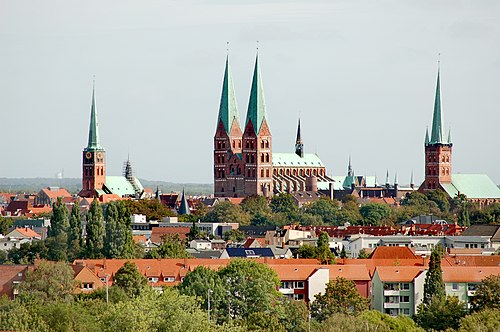
Lübeck, a city located in northern Germany, is renowned for its rich history and well-preserved medieval architecture. Founded in 1143, Lübeck became a prominent center of the Hanseatic League, a powerful trade alliance in the late Middle Ages. Its strategic location along the Trave River, which flows into the Baltic Sea, facilitated commerce and trade, allowing Lübeck to flourish. The city's old town, a UNESCO World Heritage Site since 1987, is distinguished by its stunning brick Gothic architecture, including the iconic Holsten Gate, St. Mary's Church, and the historic Market Square. Lübeck’s medieval architecture and narrow streets provide a glimpse into its past, reflecting the political and economic importance it held during the Hanseatic period.
Lübeck also boasts a vibrant cultural scene and is often referred to as the "City of Seven Towers" due to the numerous church steeples that dominate its skyline. The city hosts various annual festivals and events, celebrating its maritime heritage and cultural contributions. Notably, Lübeck is famous for its marzipan, and the Lübecker Marzipan Museum showcases the history and craft of this confectionery. Famous figures associated with Lübeck include the Nobel Prize-winning author Thomas Mann, who was born in the city, and whose literary contributions reflect the city's cultural depth. Additionally, Lübeck’s location makes it an ideal gateway to explore the nearby Baltic coastline, adding to its appeal as both a historical and tourist destination. The combination of its historical significance, architectural beauty, and cultural vibrancy makes Lübeck a unique and captivating city in Germany.
Facts about Lübeck
- Lübeck is known as the 'Queen of the Hanse' due to its historical significance as a major hub of the Hanseatic League, which dominated trade in Northern Europe during the Middle Ages.
- The city is famous for its well-preserved medieval architecture, earning it a UNESCO World Heritage designation in 1987. Notable structures include the Holstentor gate and St. Mary's Church.
- Lübeck is the birthplace of marzipan, a sweet treat made from almonds and sugar, and the city is home to the renowned Niederegger marzipan factory, which dates back to 1806.
- It boasts an impressive number of brick Gothic buildings, distinguishing it from many other cities in Germany, which feature different architectural styles.
- Lübeck was an important center for literature and philosophy, being the home of famous authors such as Thomas Mann and Günter Grass, who drew inspiration from the city's unique environment.
- The city has a rich tradition of Lübeck Christmas markets, which attract thousands of visitors each year, offering traditional crafts, food, and holiday spirit.
- Lübeck's old town is surrounded by water on three sides, providing picturesque views and making it one of the few large cities in Germany that is effectively islanded by waterways.
- The annual Lübeck Music Festival is a significant cultural event that features a diverse range of performances, including classical music and contemporary genres, attracting international artists.
- Lübeck has the oldest operating theater in Germany, the Theater Lübeck, which dates back to 1803 and continues to be a cultural hub for drama and performing arts.
- The city hosts the Lübeck Puppet Theater, one of the first of its kind in Europe, known for its innovative performances and contributions to the art of puppetry.