Lünen, Germany
- 91,009 people
- 9 places to visit
- 51.6105, 7.5285
Places to Visit (9)
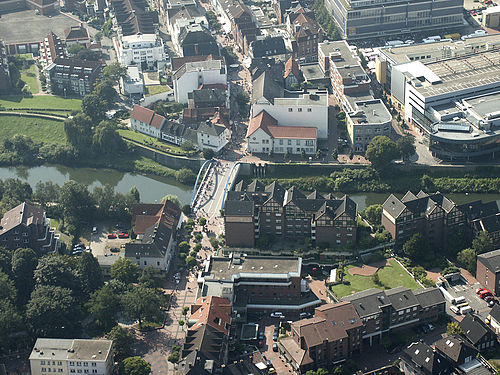
Lünen is a town in North Rhine-Westphalia, Germany, situated along the banks of the Lippe River and approximately 14 kilometers north of Dortmund. With a population of around 86,000, Lünen is known for its rich industrial history, particularly in coal mining and textile manufacturing, which were predominant from the late 19th century until the mid-20th century. The town's economy has diversified since the deindustrialization phase of the 1970s and 1980s, with a shift towards services and high-tech industries. Lünen is also valued for its strategic location, acting as a gateway to the Ruhr region, one of Germany's most densely populated and economically significant areas.
Architecturally, Lünen boasts a mix of historical and modern buildings, with landmarks such as the St. Georg Church, a late Gothic structure featuring a striking tower and intricate interior designs. The town's historical roots are further emphasized by the well-preserved old town center and the prominent brick homes that remind visitors of its medieval past. The local culture is enriched by numerous festivals and events throughout the year, including the Lünen Christmas market and various cultural exhibitions that celebrate the town's heritage and art. Surrounded by picturesque parks and waterways, Lünen also provides ample recreational opportunities, including cycling paths and recreational areas along the Lippe River. The town's blend of industrial history, cultural vibrancy, and natural beauty makes it a unique destination in Germany.
Facts about Lünen
- Lünen is known for its historic coal mining industry, which played a significant role in the region's economy during the 19th and 20th centuries.
- The city hosts the unique 'Lünen Water Sports Center', the only facility of its kind in North Rhine-Westphalia, offering diverse aquatic activities.
- Lünen features a charming blend of medieval architecture, with the St. George's Church being a notable landmark that dates back to the 13th century.
- Every year, Lünen celebrates the 'Lüner Volksfest', one of the largest folk festivals in the region, showcasing local culture, music, and cuisine.
- The city is situated on the banks of the Lippe River, which has been instrumental in its development, providing trade routes and recreational activities.
- Lünen is home to the 'Lünen Castle', a historic building that adds to its rich heritage, though it’s primarily in ruins today.
- The city has a unique riverside park called 'Lüner Stadtpark', which features large green spaces, a small lake, and hosts various events throughout the year.
- Lünen has maintained strong ties with the arts, notably through its annual 'Lünen Theater Festival', which attracts performances from local and international artists.
- The city is recognized for its innovative environmental approaches, such as the promotion of green spaces and sustainability initiatives in urban planning.
- Lünen is a part of the Dortmund metropolitan area, making it a crucial suburban location for commuters and residents seeking a blend of city and nature.