Lugo, Spain
- 96,678 people
- 18 places to visit
- 43.0097, -7.5568
Places to Visit (18)
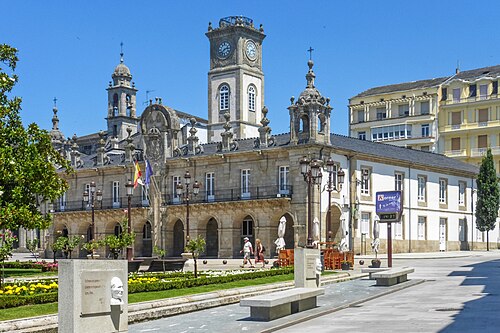
Lugo is a historic city located in the northwest of Spain in the autonomous community of Galicia. It serves as the capital of the Province of Lugo. Renowned for its well-preserved Roman heritage, Lugo is the only city in the world to be enclosed by an intact Roman wall, which has been designated a UNESCO World Heritage Site. The wall, built in the late 3rd century AD, stretches approximately 2 kilometers and features 85 towers and several gates, reflecting the advanced engineering skills of the Romans. The city’s historical significance is further highlighted by its cathedral, the Cathedral of Santa Maria, a blend of Romanesque and Gothic architecture that dates back to the 12th century, making it an important pilgrimage site along the Camino de Santiago.
Lugo's population is around 100,000, and it is known for its vibrant cultural scene and gastronomy, especially its famous octopus dish, "pulpo a la gallega," often served at local festivals. The city combines a lively urban atmosphere with traditional Galician charm, hosting numerous events throughout the year, such as the Semana Santa (Holy Week) celebrations, which attract many visitors. Lugo's strategic location near the Miño River enhances its beauty and provides opportunities for outdoor activities, including hiking and fishing. The region's natural landscapes, characterized by rolling hills and green fields, complement the city’s rich cultural and historical offerings. Overall, Lugo stands as a testament to Galicia's unique identity and heritage, offering a glimpse into the past while remaining a thriving modern city.
Facts about Lugo
- Lugo is home to one of the best-preserved Roman walls in Europe, which is a UNESCO World Heritage site and encompasses the entire historic city center.
- The city boasts 71 towers known as 'torres,' making it unique for its medieval skyline unlike any other city in Spain.
- Lugo hosts a thriving annual festival called 'Arde Lucus,' celebrating its Roman heritage with historical reenactments, traditional music, and local gastronomy.
- The Cathedral of Santa María is a mix of Romanesque and Gothic architecture, notable for its unique blend of styles and a stunning baroque altar.
- Lugo is known for its 'Caldo Galego,' a traditional Galician soup that highlights its culinary distinction within the autonomous community of Galicia.
- The city is also recognized for having the only Romanesque-style bridge over the river Miño, the 'Puente Romano,' highlighting its rich historical engineering.
- Lugo is surrounded by beautiful nature, including the 'Sierra de Ancares' and 'Fragas do Eume' national parks, offering unique biodiversity not found in many other Spanish cities.
- The city's history dates back to Roman times, having been founded as 'Lucus Augusti' around 15 BC, making it one of the oldest continuously inhabited cities in Spain.
- Lugo has a vibrant street life, particularly in its old town, featuring many traditional taverns and bodegas that offer a distinctly Galician experience.
- The city is known for its unique 'Tarta de Santiago,' a traditional almond cake that symbolizes the Galician culinary heritage, distinct from other Spanish desserts.