Manaus, Brazil
- 2,219,580 people
- 11 places to visit
- -3.119, -60.0217
Places to Visit (11)
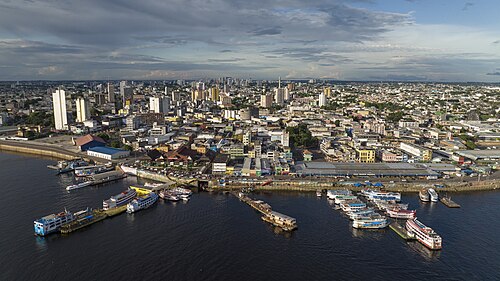
Manaus is the capital city of the state of Amazonas in Brazil and is situated at the confluence of the Negro and Solimões Rivers, forming the Amazon River. Established in 1669, it has evolved from a colonial settlement into a bustling metropolis with a population of over 2 million residents, making it one of the largest cities in northern Brazil. Manaus is also known as the "Gateway to the Amazon," attracting millions of tourists who seek to explore the vast rainforest and its rich biodiversity. The city serves as a crucial hub for commerce, finance, and tourism in the region, offering a unique mix of urban and natural experiences.
The city is distinguished by its remarkable architecture and cultural significance. One of its most iconic landmarks is the Amazon Theatre, an opera house inaugurated in 1896, which stands as a symbol of the rubber boom that fueled the city’s growth during the late 19th century. Additionally, Manaus has a vibrant mix of cultures, influenced by indigenous, Portuguese, and Afro-Brazilian traditions, leading to a diverse culinary scene, traditional festivals, and various artistic expressions. The nearby Amazon Rainforest presents numerous opportunities for ecotourism, including guided tours, wildlife spotting, and cultural exchanges with local tribes. While the challenges of urbanization, such as deforestation and socioeconomic disparities, persist, Manaus continues to thrive as a significant cultural and economic center in the Amazon region, balancing modernization with the preservation of its unique heritage and natural surroundings.
Facts about Manaus
- Manaus is the capital of the Amazonas state and is located in the heart of the Amazon rainforest, making it one of the largest cities situated in a tropical rainforest.
- The city is famous for the Meeting of Waters, where the dark waters of the Rio Negro and the sandy-colored waters of the Amazon River flow side by side without mixing for several kilometers.
- Manaus was once a major rubber boomtown in the late 19th and early 20th centuries, leading to a period of great wealth and the construction of opulent buildings, including the Teatro Amazonas, an opera house that is a symbol of the city's historical significance.
- The city is one of the few places worldwide where you can experience a unique combination of urban civilization and natural wilderness, serving as a gateway to the Amazon rainforest.
- Manaus is home to the world's largest river island, Marajó, located at the mouth of the Amazon River, which features a unique ecosystem and diverse wildlife.
- The Manaus Free Trade Zone, established in 1967, allows for tax-free trade and aims to promote industrial development in the region, making it a hub for economic activity in the Amazon.
- The annual Folklore Festival in Manaus showcases the rich mix of indigenous, Afro-Brazilian, and European influences present in Amazonas culture, differentiating it from other regions in Brazil.
- Manaus is served by the Eduardo Gomes International Airport, which is one of the busiest airports in Brazil but also serves as a critical access point to the remote areas of the Amazon.
- The city has a unique and diverse culinary tradition that includes traditional Amazonian ingredients such as tucumã, açaí, and pirarucu, distinguishing its food culture from other Brazilian cities.
- Manaus is the launching point for various eco-tourism adventures and river cruises into the Amazon rainforest, reflecting the city's role as a bridge between urban life and natural exploration.