Manchester, United Kingdom
- 395,515 people
- 18 places to visit
- 53.4808, -2.2426
Places to Visit (18)
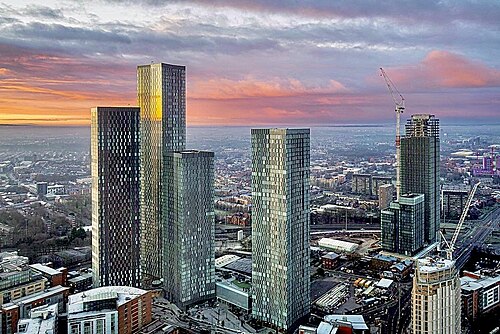
Manchester, located in the northwest of England, is a vibrant city known for its rich industrial heritage, cultural contributions, and notable sporting achievements. With a population of over 550,000, it is the third-most populous city in the UK and serves as a major financial and cultural hub. The city emerged during the Industrial Revolution, becoming a center for textile manufacturing due to its advanced steam engine technology and the establishment of factory systems. The iconic Cotton Palace, once representing the textile industry, showcases Manchester's historical significance in shaping modern industrial practices. Today, this industrial legacy coexists with a diverse economy that includes finance, technology, and higher education, bolstered by institutions such as the University of Manchester and Manchester Metropolitan University.
Culturally, Manchester boasts a lively music and arts scene that has produced world-renowned bands and artists, including The Smiths, Oasis, and Joy Division. The city hosts numerous festivals and events throughout the year, celebrating everything from music to food and literature, reflecting its dynamic and diverse community. Its architectural landscape is a mix of historic buildings, such as the neo-gothic Town Hall and the modern designs of the Manchester Arena and MediaCityUK. As one of the UK’s leading sporting cities, Manchester is home to two major football clubs, Manchester United and Manchester City, both of which have passionate followings and have enjoyed significant success in various competitions. With its unique blend of history, culture, and contemporary vibrancy, Manchester continues to attract visitors and residents alike, making it a prominent city in both the UK and the global stage.
Facts about Manchester
- Manchester was the world's first industrialized city, leading the way during the Industrial Revolution with its vast textile manufacturing industry.
- The Manchester Ship Canal, opened in 1894, allowed ocean-going ships to reach the city and played a key role in its economic growth, making Manchester a vital port.
- Home to the world-famous football clubs Manchester United and Manchester City, the city has a rich sporting heritage and is known as a football capital.
- The region is known for its musical legacy, producing famous bands and artists such as The Smiths, Oasis, and Take That, making it a cultural hub for music.
- The John Rylands Library, built in 1899, is a stunning example of neo-Gothic architecture and houses one of the world's finest collections of rare books and manuscripts.
- Manchester played a significant role in the fight for workers' rights, especially highlighted by the Peterloo Massacre in 1819, which became a symbol of the struggle for democracy.
- The city is home to the University of Manchester, which is part of the prestigious Russell Group and has produced 25 Nobel Prize winners.
- The Manchester International Festival, launched in 2007, is the world's first festival of new, original work and has been a key event for contemporary art and performance.
- The city hosted the Commonwealth Games in 2002, demonstrating its capability to host large international sporting events and enhancing its global profile.
- Manchester is renowned for its innovative contributions to science and engineering, with notable inventions including the first programmable computer and the modern railway system.