Mandalay, Myanmar
- 1,208,099 people
- 13 places to visit
- 21.9588, 96.0891
Places to Visit (13)
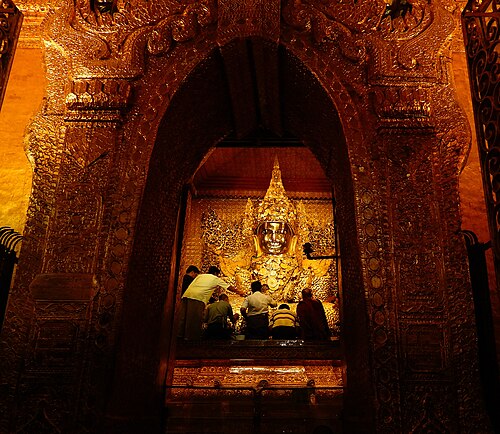
Mandalay, the second-largest city in Myanmar, serves as the economic and cultural hub of the country, located in the central region along the banks of the Irrawaddy River. Founded in 1857, Mandalay was the last royal capital of Myanmar, established by King Mindon Min. The city is a rich tapestry of history, religion, and art, characterized by its royal heritage. The Mandalay Palace, a stunning example of traditional Burmese architecture, is the focal point of the city, reflecting the grandeur of the last monarchy. The city is also renowned for its numerous pagodas and monasteries, including the Kuthodaw Pagoda, which houses the world's largest book—a collection of 729 stone slabs inscribed with Buddhist scriptures.
Mandalay's culture is deeply rooted in Buddhism, and it plays a crucial role in the religious practices of the country. The city is the center of many traditional crafts, including silk weaving, stone carving, and gold leaf production, contributing to its status as a vital cultural resource. Mandalay Hill, a prominent natural landmark, offers panoramic views of the city and is a popular pilgrimage site, frequented by both locals and tourists alike. The city's vibrant street life is complemented by traditional markets, imposing monasteries, and a lively arts scene. In recent years, Mandalay has seen significant development, with improvements in infrastructure and tourism facilities, bolstering its economy. However, the region faces challenges, including political instability and socio-economic issues, which have evolved over the years. Overall, Mandalay is a city that embodies the historical and cultural essence of Myanmar, offering a unique glimpse into its past and present.
Facts about Mandalay
- Mandalay is the last royal capital of Myanmar, established in 1857 by King Mindon Min and was the center of Myanmar's monarchy until 1885.
- The city is home to Mandalay Hill, a significant pilgrimage site and vantage point that rises 240 meters above the city, offering panoramic views.
- Mandalay is known for its unique cultural heritage, including traditional crafts such as silk weaving, marble carving, and gold leaf production.
- At the base of Mandalay Hill lies the Kuthodaw Pagoda, which houses the world's largest book – 729 marble slabs inscribed with the Tripitaka scriptures.
- The Mahamuni Buddha Temple in Mandalay features a highly revered Buddha image that is covered in gold leaf, and it attracts thousands of visitors each year.
- Mandalay is renowned for its woodwork and is home to the ancient Palace of Mandalay, which is a stunning example of traditional Burmese architecture.
- The city serves as a gateway to several significant cultural sites, including Ancient Amarapura and the U Bein Bridge, known as the longest teak bridge in the world.
- Mandalay hosts the annual Mandalay Pagoda Festival, showcasing various cultural performances, traditional foods, and religious rituals.
- The nearby Sagaing Hills, just a short distance from Mandalay, is famous for its many stupas and monasteries, making it a major Buddhist center.
- Mandalay is also known for its vibrant street food scene and the local delicacy of 'Mohinga', a traditional fish noodle soup enjoyed by many.