Mannheim, Germany
- 307,960 people
- 18 places to visit
- 49.4875, 8.466
Places to Visit (18)
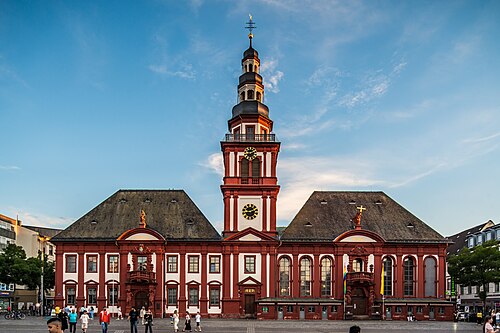
Mannheim is a vibrant city located in the southwestern part of Germany, known for its unique grid layout and significant cultural and economic contributions. Situated at the confluence of the Rhine and Neckar rivers, Mannheim is the second-largest city in the state of Baden-Württemberg and has a population of approximately 300,000 residents. Established in the 17th century, it quickly grew into a prominent industrial hub, particularly during the industrial revolution, thanks to its advantageous location and well-developed transport infrastructure. The city's layout is distinctive, featuring a rectangular grid pattern that is rare in German cities, which enhances its walkability and accessibility.
Mannheim is home to several notable cultural institutions, including the National Theatre Mannheim, which is one of the oldest theaters in Germany, and the Mannheim Palace, a baroque masterpiece that houses the University of Mannheim. The university is recognized for its strong business and economics programs, contributing to the city’s reputation as an educational center. The city also boasts an array of museums, such as the Kunsthalle Mannheim, which showcases modern and contemporary art, and the Technoseum, dedicated to the history of technology and industry. Mannheim's vibrant cultural scene is further highlighted by its diverse festivals and events, including the Mannheim Wine Market and the International Circus Festival.
Economically, Mannheim thrives as a center for various industries, including engineering, information technology, and logistics. The city's proximity to major transport routes enhances its status as an important logistics hub in Europe, with a strategic location that connects it to major cities and regions. Furthermore, Mannheim has a reputation for innovation, being home to several research institutions and start-ups that emphasize cutting-edge technologies. With its rich history, dynamic economy, and cultural wealth, Mannheim stands out as a significant urban center in Germany, offering a blend of tradition and modernity that attracts both residents and visitors alike.
Facts about Mannheim
- Mannheim is known for its unique grid layout, making it one of the few cities in Germany with a checkerboard pattern for its streets.
- The city is home to the Baroque Palace of Mannheim, one of the largest palaces in Germany, which is a UNESCO World Heritage site.
- Mannheim is famously known as the birthplace of the automobile, as Karl Benz created the first gasoline-powered car in the city in 1885.
- The city hosts the famous Mannheim Steamroller, a musical group known for its unique take on holiday music and innovative use of technology in their performances.
- Mannheim is a cultural hub with several prominent institutions, including the Mannheim National Theatre, one of the largest theaters in Europe.
- The city is distinct for its waterfront location at the confluence of the Rhine and Neckar rivers, featuring scenic river promenades.
- Mannheim's population includes a diverse community, with a significant percentage of residents having immigrant backgrounds, contributing to its multicultural atmosphere.
- The SAP Arena in Mannheim is a major venue for sporting events and concerts, making it one of the most important places for entertainment in the region.
- Mannheim is also known for its vibrant music scene and is a key city in the German hip-hop and electronic music scenes.
- The city hosts the renowned Mannheim Wine Market, one of the largest wine fairs in Germany, celebrating the region's rich viticulture.