Mansfield, United Kingdom
- 171,958 people
- 16 places to visit
- 53.1472, -1.1987
Places to Visit (16)
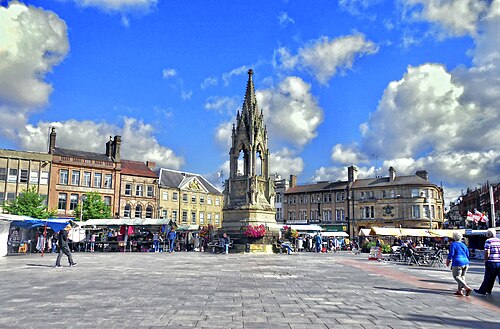
Mansfield is a market town located in Nottinghamshire, England. Situated about 20 miles northeast of Nottingham, it lies at the northern edge of the Sherwood Forest. Historically, Mansfield played a significant role in the coal mining industry, particularly during the 19th and early 20th centuries, when the region was known for its rich coal deposits. This industrial background has shaped the town's development and demographic profile over time. Despite the decline of coal mining in the late 20th century, Mansfield has evolved and diversified its economy, with sectors such as retail, healthcare, and education becoming increasingly significant.
The town is known for its vibrant community and cultural heritage. Mansfield features a range of local amenities and attractions, including the Mansfield Palace Theatre, which hosts various performances and events, and the bustling Four Seasons Shopping Centre. Additionally, the area surrounding Mansfield offers beautiful natural landscapes, with several parks and recreational areas available for residents and visitors alike. The nearby Sherwood Forest is a renowned national nature reserve that draws tourists interested in its historical connection to the Robin Hood legend. Mansfield's population is diverse, boasting a mix of cultural influences and a strong sense of community identity.
Transport links are a key feature of Mansfield, providing access to surrounding towns and cities. The town is served by the A38 and A617 roads, facilitating road travel, while the Mansfield railway station connects the town to Nottingham and the wider rail network. Public transport options include bus services, making it accessible for commuters and visitors. Over the years, Mansfield has worked on various regeneration projects aimed at revitalizing its town center and addressing social challenges. These initiatives reflect a commitment to improving the quality of life for residents while promoting economic growth. Overall, Mansfield stands as a town with a rich history and a commitment to progress, blending its industrial legacy with a vision for the future.
Facts about Mansfield
- Mansfield is historically known for its connection to coal mining, with the industry playing a significant role in its development during the 19th and early 20th centuries.
- The town is home to the iconic Mansfield Palace Theatre, which has been a key cultural venue since the 1910s, showcasing a variety of performances including drama, dance, and music.
- In 1837, Mansfield was the birthplace of the famous Nottinghamshire poet and writer, John Clare, who is often celebrated for his deep connection to nature and rural life.
- Mansfield’s Market Place has been a central hub for trade for centuries, with a traditional market that operates every Wednesday and Saturday, offering a range of local produce and goods.
- The town hosts the annual Mansfield Show, a highlight of the local calendar that features agricultural exhibits, livestock competitions, and a variety of entertainment, drawing visitors from across the region.
- Mansfield is uniquely home to the Sherwood Forest, which is associated with the legendary Robin Hood, with areas of the forest located within its boundaries reflecting the area's rich folklore.
- Mansfield has a strong sporting heritage, particularly in football, with notable teams such as Mansfield Town F.C., which has a passionate fan base and competes in the English Football League.
- The town is closely linked to the Great Central Railway, which was the last major railway to be built in the UK during the Victorian era, and parts of its route can still be explored today.
- Mansfield is recognized for its vibrant arts scene, including the annual Mansfield Dance Festival that celebrates various dance styles and encourages community participation.
- The local economy has diversified, but Mansfield is still recognized for its manufacturing sector, being home to several important industries including textiles and food production.