Mantova, Italy
- 39,260 people
- 17 places to visit
- 45.1563, 10.7914
Places to Visit (17)
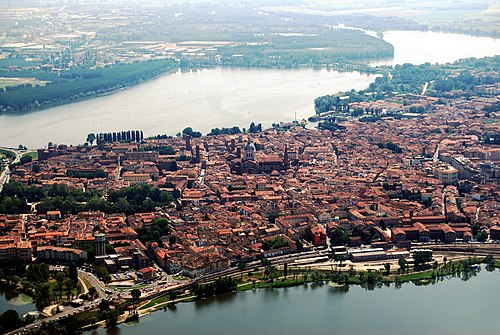
Mantova, also known as Mantua, is a city located in the Lombardy region of northern Italy. Nestled between the Mincio River and several artificial lakes, the city boasts a rich history that dates back to the Etruscans, with significant development occurring during the Roman period. Mantova gained prominence during the Renaissance, particularly under the Gonzaga family, who ruled the city from the 14th to the 18th centuries. The Gonzagas were patrons of the arts, attracting renowned artists like Andrea Mantegna and Giulio Romano, which led to the flourishing of culture and architecture in the city.
The city's historic center, characterized by its elegant palaces and churches, is recognized as a UNESCO World Heritage Site. Notable landmarks include the Palazzo Ducale, which served as the residence of the Gonzaga family, and the Palazzo Te, a masterpiece of Renaissance architecture known for its stunning frescoes. The Cathedral of Sant'Andrea, designed by the architect Leon Battista Alberti, is another significant structure, featuring a blend of Gothic and Renaissance styles. Mantova is also famous for its picturesque squares, including Piazza delle Erbe and Piazza Sordello, which serve as vibrant social hubs. Culturally, Mantova hosts various festivals, including the Mantova Film Festival and the Festivaletteratura, attracting visitors each year to celebrate literature and cinema.
In addition to its rich historical and cultural offerings, Mantova is known for its culinary traditions. The local cuisine features dishes that highlight regional ingredients, such as tortelli di zucca (pumpkin-filled pasta) and risotto with local wines. The surrounding countryside is renowned for its production of Lambrusco wine, enhancing the culinary experience. Today, Mantova is a destination that combines its storied past with modern vibrancy, making it a captivating stop for tourists seeking to explore Italy's diverse heritage.
Facts about Mantova
- Mantova is known for its remarkable Renaissance architecture, particularly the Palazzo Ducale, which houses a vast collection of art and frescoes.
- The city is surrounded on three sides by a series of artificial lakes, a unique feature that sets it apart from many other Italian cities.
- Mantova was declared a UNESCO World Heritage Site in 2008, recognizing its cultural significance and well-preserved historical center.
- The city played a crucial role during the Italian Renaissance, serving as a cultural hub for artists like Andrea Mantegna and Giulio Romano.
- Mantova is famous for its cuisine, particularly the 'Tortelli di zucca' (pumpkin tortelli), which is a traditional dish of the region.
- The city hosts the Mantova Chamber Music Festival, an important event that attracts international musicians each year.
- Mantova has a rich literary history, being the birthplace of the renowned poet and writer Virgil in 70 BC.
- The 'Fiera del Riso,' an annual rice festival, celebrates Mantova's long-standing agricultural heritage, particularly its rice cultivation.
- The city's historic theaters, like the Teatro Bibiena, are notable for their Baroque interiors and contribute to Mantova's artistic ambiance.
- Mantova's impressive skyline is dominated by the Torre della Gabbia and the Torre dei Prendiparte, offering stunning views of the landscape.