Marburg an der Lahn, Germany
- 78,895 people
- 14 places to visit
- 50.8019, 8.7658
Places to Visit (14)
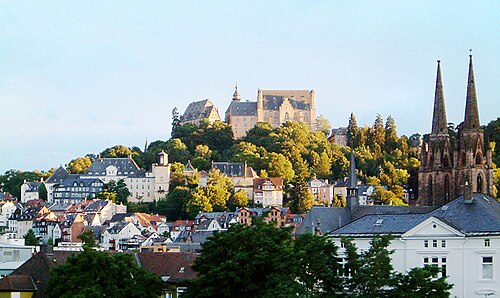
Marburg an der Lahn is a historic city located in the central part of Germany, in the state of Hesse. Nestled along the banks of the Lahn River, Marburg has a population of approximately 74,000 residents. The city is renowned for its picturesque medieval architecture, with a blend of Gothic and Renaissance styles reflected in its buildings. One of Marburg's most prominent landmarks is the Landgrafenschloss, a castle that dates back to the 1200s. Perched on a hill overlooking the city, the castle offers panoramic views and serves as a symbol of the city’s rich history, particularly its significance in the Landgraviate of Hesse.
The city is also well-known for its educational institutions, particularly the Philipps University of Marburg, which was founded in 1527. It holds the distinction of being the oldest Protestant university in the world and has established a reputation for its research programs, particularly in the fields of medicine, humanities, and social sciences. The presence of the university contributes to a vibrant student population and a dynamic cultural environment characterized by festivals, art exhibitions, and music events. Marburg's narrow cobblestone streets, lined with half-timbered houses and charming cafes, enhance its appeal as a destination for tourists and scholars alike.
Marburg's history is rich and varied, with influences from various European powers over the centuries. The city played a role in the Reformation and was a key site of the Landgraves of Hesse, who were instrumental in the development of Protestantism in Germany. Additionally, Marburg hosts several museums and cultural sites, such as the Alte Universität and the Kunstverein, which provide insight into its past and showcase contemporary art. The city's surrounding natural landscapes, including the Lahn Valley, offer opportunities for outdoor activities like hiking and cycling, further enhancing Marburg's allure as a blend of historical significance and scenic beauty.
Facts about Marburg an der Lahn
- Marburg is home to the oldest Protestant university in the world, Philipps University, founded in 1527.
- The city is known for its well-preserved medieval architecture, particularly the Landgrafenschloss (Landgrave Castle), which overlooks the city.
- Marburg has a unique half-timbered old town, making it one of the best examples of a medieval urban landscape in Germany.
- The Elisabeth Church in Marburg, built in honor of Saint Elizabeth of Hungary, is a prime example of Gothic architecture and was consecrated in 1283.
- Marburg hosts the annual 'Marburger Weihnachtsmarkt', a traditional Christmas market attracting visitors with local crafts and seasonal treats.
- The city played a significant role during the Reformation, as it was the site of the Marburg Colloquy in 1529, where Martin Luther and Ulrich Zwingli debated their theological differences.
- Marburg's botanical garden, part of the university, includes unique plant species and contributes to its status as a center for education and research.
- The city is also known for its vibrant student life, with a significant portion of the population being university students, giving it a youthful atmosphere.
- Marburg is situated in the scenic Lahn Valley, surrounded by hills and forests, providing numerous outdoor recreational activities and stunning landscapes.
- The town has an intriguing history involving the 'Marburg witch trials' in the late 16th century, reflecting the complex interactions of religion and politics during that era.