Maringá, Brazil
- 311,724 people
- 9 places to visit
- -23.421, -51.9331
Places to Visit (9)
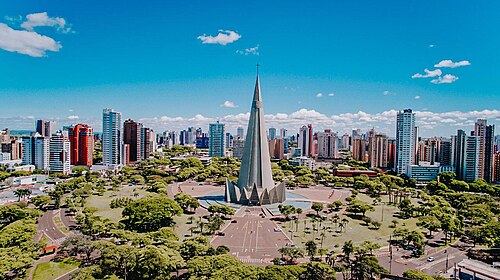
Maringá is a vibrant city located in the southern Brazilian state of Paraná. Established in 1947, it has grown rapidly, becoming one of the most important urban centers in the region. The city is known for its planned urban layout, which was influenced by the modernist architecture movement, and features wide avenues, ample green spaces, and a variety of public parks. Maringá is often referred to as the "City of Flowers" due to its extensive flora, particularly the flowering of ipê trees, which transform the streets into a colorful spectacle during certain seasons. The city’s development was driven by the agricultural boom in the region, particularly in coffee production, which fostered economic growth and attracted migration from diverse parts of Brazil.
Maringá boasts a population of over 400,000 residents and is home to a range of cultural and educational institutions. The city houses several universities, including the State University of Maringá, which contributes to its reputation as a center of higher education. In addition to its academic significance, Maringá hosts numerous cultural events, such as music festivals and art exhibitions, reflecting the rich cultural tapestry of the area. The city is also recognized for its culinary scene, offering an array of local and international cuisines. Due to its strategic location, Maringá serves as a commercial hub, with a strong presence in sectors like agriculture, trade, and services. The combination of urban planning, economic vitality, and cultural richness makes Maringá an attractive destination for tourists and a desirable place to live, showcasing the dynamic spirit of Brazilian urban life.
Facts about Maringá
- Maringá is known for its distinctive urban planning and is often referred to as the 'City of Flowers' due to its abundant green spaces and flower gardens.
- The city is home to the iconic Cathedral of Maringá, one of the tallest churches in Brazil, featuring a unique architectural style that combines modernism with traditional elements.
- Maringá hosts the annual 'Festa Nacional do Peão de Boiadeiro', one of the largest rodeo festivals in Brazil, attracting thousands of visitors and showcasing cowboy culture.
- The city was founded in 1947 and is one of the youngest cities in Brazil, often recognized for its rapid development and urbanization since its inception.
- Maringá has a well-developed public transportation system, which is notable for its efficient integration of bus services, making it one of the most accessible cities in the country.
- The Maringá Municipal Market is famous for its wide variety of local products, including fresh produce, and is a popular destination for both residents and tourists.
- The city boasts a high quality of life and has been consistently ranked among the best places to live in Brazil due to its low crime rates and quality healthcare.
- Maringá's education system is recognized for its excellence, with numerous universities and colleges that contribute to a well-educated population.
- The city's population is known for its cultural diversity, influenced by immigrants from various countries, particularly European and Japanese communities.
- Maringá is a significant agricultural hub in Brazil, often referred to as the 'Agricultural Capital of the State of Paraná' due to its extensive agricultural activities and innovations.