Marl, Germany
- 91,398 people
- 9 places to visit
- 51.6591, 7.106
Places to Visit (9)
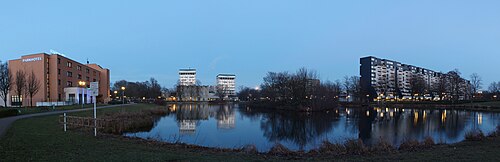
Marl is a city in North Rhine-Westphalia, Germany, located in the district of Recklinghausen. It lies in the Ruhr area, which is known for its rich history in coal and steel production. The city has a population of approximately 85,000 residents and covers an area of about 91 square kilometers. Marl's history dates back to the Middle Ages, with the first recorded mention in 1092. The city's development was significantly influenced by industrialization in the 19th century, particularly due to the discovery of coal in the region. This led to a rapid increase in population and urbanization, and Marl transformed from a small village into an industrial town.
One of the key features of Marl is its strong industrial base, which includes chemical and energy companies. The city is home to the large chemical complex operated by ExxonMobil, one of the region's major employers. Despite its industrial roots, Marl has made efforts to modernize and diversify its economy. In recent years, the city has focused on promoting innovation and sustainability, especially in the areas of environmental technology and energy efficiency. Marl also offers residents and visitors various recreational facilities, parks, and cultural events, contributing to its quality of life. The city is well-connected by road and rail, making it accessible from major urban centers in North Rhine-Westphalia and beyond. Additionally, Marl has a vibrant cultural scene, with theaters, museums, and sites of historical interest that reflect its rich heritage.
Overall, Marl presents a unique blend of industrial legacy and modern living. The city's commitment to sustainable development, combined with its historical significance and cultural offerings, makes it an intriguing place within the larger context of the Ruhr area's transformation from industrial powerhouse to a more diversified economy. As Marl continues to evolve, it aims to enhance the quality of life for its citizens while preserving the historical roots that have shaped its identity over the centuries.
Facts about Marl
- Marl is known for the historic St. George's Church, which dates back to the 12th century and features a unique blend of Romanesque and Gothic architecture.
- The city is home to the 'Marl Castle', an impressive 14th-century castle that was originally built for defense and now serves as a cultural venue.
- Marl was once a key center for coal mining and chemical industry in the Ruhr area, significantly contributing to Germany's industrial development, particularly in the 20th century.
- Every summer, Marl hosts the 'Marl Festival,' a multi-day event that showcases local culture, food, and music, attracting visitors from around the region.
- Marl is located along the scenic Lippe River, which offers recreational opportunities such as cycling and hiking along its banks.
- The city boasts the 'Skulpturenwald Marl,' an outdoor sculpture park featuring over 60 unique sculptures by national and international artists.
- In terms of education, Marl has a strong emphasis on vocational training, which aligns with its industrial heritage and the needs of local businesses.
- Marl is part of the state of North Rhine-Westphalia, which is known for having the most extensive public transport network in Germany, making it accessible to surrounding cities.
- The city was the site of the 'Marl Chemical Company' (now part of Evonik Industries), which played a significant role in the development of the chemical industry in Germany.
- Marl's architecture features a blend of modernist and traditional styles, with several post-war buildings reflecting the city's rebuilding efforts after World War II.