Mathura, India
- 330,511 people
- 10 places to visit
- 27.4924, 77.6737
Places to Visit (10)
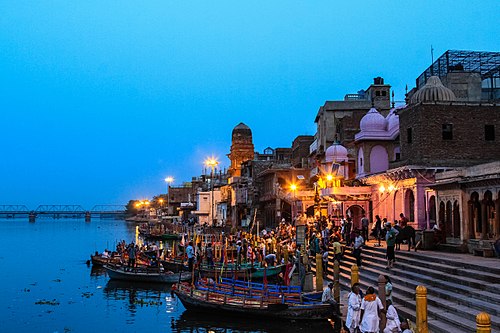
Mathura, located in the northern state of Uttar Pradesh, India, is a city steeped in religious significance and historical importance. Renowned as the birthplace of Lord Krishna, one of Hinduism's most revered deities, Mathura attracts millions of pilgrims and tourists each year. The city is positioned along the banks of the Yamuna River, which adds to its aesthetic appeal and spiritual ambiance. Mathura has a rich cultural heritage, with a history that dates back to ancient times, being referenced in several sacred texts, including the Mahabharata and the Puranas. The city is often depicted as a center of arts and crafts, particularly in the creation of beautiful brassworks, pottery, and intricate jewelry.
The architectural landscape of Mathura is punctuated by numerous temples, ghats, and monuments that reflect its deep-rooted spiritual legacy. Among the most significant sites is the Krishna Janmabhoomi Temple, believed to be the exact location of Lord Krishna's birth. This temple complex is a focal point for devotees and features a blend of ancient and modern architectural styles. Another prominent site is the Vishram Ghat, known for its beautiful steps leading down to the Yamuna River, where pilgrims perform ritual baths and prayers. Mathura also hosts several vibrant festivals, particularly Janmashtami, the celebration of Krishna's birth, which transforms the city into a lively hub of devotion, music, and dance. In addition to its religious significance, Mathura plays a vital role in the cultural and economic landscape of the region, contributing to the local economy through tourism and trade.
Mathura's strategic location near other important pilgrimage sites, such as Vrindavan, Gokul, and Goverdhan, enhances its attractiveness as a destination for spiritual tourism. The city is well-connected through road and rail networks, making it accessible for visitors from both nearby urban centers and distant locations. While it predominantly showcases its Hindu heritage, Mathura also reflects a blend of various cultural influences developed over centuries, evident in its cuisine, art, and local customs. Diverse food options, including local delicacies like mathura ke pede (sweets) and a range of vegetarian dishes, add to the city's allure. With its amalgamation of history, spirituality, and culture, Mathura remains a significant beacon of devotion and heritage in India, drawing pilgrims and travelers eager to experience its sacred atmosphere.
Facts about Mathura
- Mathura is recognized as the birthplace of Lord Krishna, one of the most revered deities in Hinduism.
- The city is home to the Krishna Janmabhoomi, a temple complex that marks the exact spot where Lord Krishna is believed to have been born.
- Mathura is part of the Braj region, which is famous for its association with the life and legends of Lord Krishna, making it a significant pilgrimage site for Hindus.
- The city hosts the annual 'Janmashthami' festival, celebrating the birth of Lord Krishna, attracting thousands of devotees and tourists from around the world.
- Mathura has a rich cultural heritage beyond religion, with historical ties to the ancient city of Mathura, which was a major center for art and sculpture during the Kushan Empire.
- The Mathura Museum, established in 1874, houses an extensive collection of ancient sculptures and artifacts that reflect the artistic heritage of the region.
- Mathura is renowned for its unique cuisine, particularly dishes such as 'Peda' (a type of sweet) that originated in this region.
- The Yamuna River flowing through Mathura is considered sacred and plays a crucial role in various religious activities and rituals in the city.
- Mathura is known for its vibrant markets where traditional handicrafts, especially brassware, and religious artifacts are sold.
- The city is well-connected to other major cities in North India and serves as a gateway to other significant pilgrimage sites in the Braj region, such as Vrindavan.