Matsue, Japan
- 156,811 people
- 11 places to visit
- 35.4682, 133.0484
Places to Visit (11)
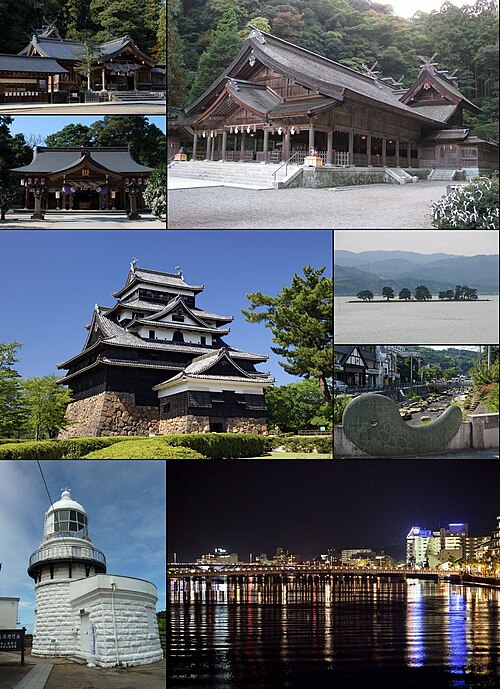
Matsue, located in the Shimane Prefecture of Japan, is a city renowned for its rich history, cultural heritage, and scenic beauty. Nestled between Lake Shinji and Lake Nakaumi, Matsue serves as a gateway to the San'in region and offers picturesque landscapes that attract both domestic and international visitors. The city boasts a well-preserved samurai district, where traditional wooden houses and narrow streets provide a glimpse into Japan's feudal past. Notably, Matsue Castle, also known as “The Black Castle,” is one of the few remaining feudal castles in Japan, dating back to 1611. The structure is distinguished by its unique black exterior and stunning views of the surrounding area, making it a prominent symbol of the city.
Matsue is also celebrated for its cultural contributions, particularly in literature and arts. The city was the home of the famous Japanese poet Matsuo Bashō, and visitors can explore the Matsuo Bashō Memorial Museum, which showcases his works and the influences of Matsue on his poetry. The city is known for its annual events, such as the Matsue Suigo Festival and the Matsue Saito 50th Anniversary Festival, which highlight traditional and contemporary Japanese culture. Additionally, Matsue's culinary scene features local specialties like shijimi clams from Lake Shinji and Mizuki, a rice-based dish that reflects the region's agricultural heritage. With its blend of historical significance and natural beauty, Matsue remains a unique destination within Japan, captivating the hearts of those who explore its streets and landscapes.
Facts about Matsue
- Matsue is known as the 'City of Water' due to its location between Lake Shinji and Lake Nakaumi, featuring numerous canals and waterways.
- The iconic Matsue Castle, built in 1611, is one of the few remaining original castles in Japan and is designated as a national treasure.
- Matsue is famous for its unique tradition of 'Matsue Japanese Sake' production, with several breweries using local rice and pure water from the region.
- The city is the birthplace of the renowned Japanese poet Matsuo Bashō, who significantly contributed to the development of haiku poetry.
- Matsue hosts the annual Matsue Shinjitsu Matsuri, a spring festival celebrated with traditional parades, performances, and local cuisine.
- The Adachi Museum of Art in Matsue is known for its stunning Japanese gardens, which have repeatedly been awarded as the best gardens in Japan.
- Matsue was designated a 'Cultural Capital' by the Japanese government for its rich historical sites, arts, and preservation of traditional crafts.
- The city was also an important center during the Edo period, serving as a castle town and developing a distinct merchant culture.
- Matsue has a significant connection to the English author Lafcadio Hearn, who lived in the city and wrote extensively about Japanese culture.
- Matsue is located in the Shimane Prefecture, home to the ancient Izumo Taisha shrine, one of the oldest and most important Shinto shrines in Japan.