Mégara, Greece
- 23,456 people
- 4 places to visit
- 37.9943, 23.343
Places to Visit (4)
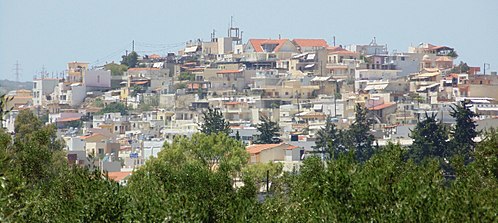
Mégara, an ancient city located in the east of Attica, Greece, has a rich history that dates back to the 8th century BCE. Situated near the Saronic Gulf, approximately halfway between Athens and Corinth, Mégara played a significant role in the socio-political landscape of ancient Greece. The city was originally founded by settlers from the region of Megara in the Peloponnese, a fact reflected in its name. It was known for its strategic location, which facilitated trade and military movements. Mégara flourished as a center of commerce and culture during the Archaic period and was renowned for its textiles, especially the purple-dyed fabrics that were highly prized in ancient markets.
Throughout its history, Mégara maintained a complex relationship with Athens, often marked by tension and rivalry. The city was a notable player in various regional conflicts, including the Peloponnesian War, where it initially aligned with Sparta against Athens. The Mégarian Decree, enacted by the Athenian statesman Pericles, was a turning point in their relations, leading to a blockade that crippled Mégara's economy. Despite these challenges, the city was also the birthplace of notable philosophers and political figures, such as Euclid of Mégara, a follower of Socratic thought, and the famous pre-Socratic philosopher, Theagenes.
Today, Mégara is characterized by its archaeological significance, with remnants of ancient structures, including walls, temples, and theaters, that reflect its storied past. The modern town retains some aspects of its ancient heritage, while also functioning as a suburban center for nearby Athens. The area continues to draw interest from historians and tourists alike, who are eager to explore its rich legacy. Mégara's contributions to ancient Greek culture, especially in philosophy and trade, underscore its importance in understanding the historical development of the region. As a bridge between the mainlands of Attica and the Peloponnese, Mégara remains a symbol of ancient connectivity and cultural exchange.
Facts about Mégara
- Mégara is one of the oldest cities in Greece, founded in the 8th century BC, and played a vital role in the establishment of several colonies, including Byzantium (modern-day Istanbul).
- The city is renowned for its unique form of ancient Greek architecture, particularly the Mégarian style, which predates the more commonly known Doric and Ionic styles.
- Mégara was the birthplace of the philosopher Euclid, known as the 'father of geometry,' who significantly influenced mathematics and geometry that is taught today.
- The city was a prominent commercial hub in ancient Greece, strategically located between Athens and Corinth, which contributed to its economic prosperity and cultural exchange.
- Mégara was home to the famous Mégarian school of philosophy, which focused on logic and ethics and was influential in the development of dialectical reasoning.
- The ancient city has several significant archaeological sites, including the ruins of the Temple of Apollo and the ancient theatre, showcasing its historical importance.
- Mégara is famous for the Mégara hen, a breed of chicken that is recognized for its high egg production and distinctive appearance, contributing to local agriculture.
- Every year, Mégara hosts the 'Meganisi Festival,' celebrating local culture through music, dance, and traditional food, drawing visitors both locally and beyond.
- The city has a unique geographical feature, the Mégara Gulf, which provides picturesque views and serves as a site for various water sports and recreational activities.
- Mégara’s economy includes traditional crafts and industries, such as olive oil production and pottery, highlighting its rich cultural heritage.