Mek'ele, Ethiopia
- 457,900 people
- 9 places to visit
- 13.4963, 39.4743
Places to Visit (9)
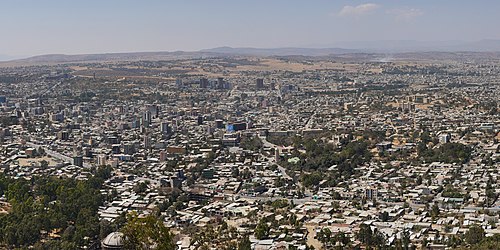
Mek'ele, the capital city of the Tigray region in northern Ethiopia, is situated at an altitude of approximately 2,584 meters (8,448 feet) above sea level, making it one of the highest cities in the country. With a population of around 300,000 people, Mek'ele serves as an economic and cultural hub for the Tigrayan people. Its history is deeply intertwined with the broader narrative of Ethiopia's past, including the struggle for independence, the rise of the Ethiopian People's Revolutionary Democratic Front (EPRDF), and the complex political dynamics of the region. The city's landscape is characterized by its striking mountainous surroundings and a predominantly rocky terrain, which blends natural beauty with a rich tapestry of urban life.
Mek'ele is also known for its historical sites, such as the notable local churches and the nearby ancient rock-hewn churches of Tigray, which are a UNESCO World Heritage Site. The city has been emerging as a center for education and innovation, hosting several institutions, including Mek'ele University, which attracts students from across Ethiopia and beyond. Local industries primarily focus on agriculture, trade, and manufacturing, with the surrounding fertile highlands contributing to various agricultural activities. Despite its economic potential, Mek'ele has faced significant challenges, particularly in recent years due to the armed conflict that escalated in late 2020 between Ethiopian federal forces and Tigrayan militias. This conflict led to humanitarian crises, disruption of services, and a deterioration in living conditions for residents.
The city, once a gateway for tourists exploring the northern historical route of Ethiopia, now finds itself at a crossroads as it seeks to rebuild and recover from conflict. International attention has focused on Mek'ele, bringing to light issues of human rights, food security, and access to essential services. Efforts for peace and reconciliation are underway, with a strong emphasis on dialogue and community healing as essential components for stability and development in Mek'ele and the broader Tigray region. As the situation continues to evolve, the resilience of its citizens and the potential for economic recovery and cultural revival remain crucial to its future.
Facts about Mek'ele
- Mek'ele is the capital city of the Tigray region in northern Ethiopia, making it a significant political and administrative center in the country.
- The city served as a key location during the Ethiopian Civil War, which greatly impacted its development and infrastructure.
- Mek'ele is known for its unique rock-hewn churches, including the famous Abreha We Atsbeha, which date back to the 4th century AD.
- The city is home to the Mek'ele University, established in 2000, which has become an important educational institution in Ethiopia.
- Mek'ele features a vibrant culture that is reflected in its traditional music, dance, and annual cultural festivals, distinguishing it from other Ethiopian towns.
- The capital of Tigray, Mek'ele, played a pivotal role in the 1980s during the fight against the Derg regime, being a base for the Tigray People's Liberation Front (TPLF).
- Mek'ele has a unique historical site called the Tigray Martyrs' Memorial Monument, which honors those who fought for the region's autonomy, setting it apart in terms of local history.
- The city is known for its distinctive architecture, with traditional Tigrayan homes built from stone and mud, showcasing regional styles.
- Mek'ele's economy is driven by agriculture and trade, with a unique focus on local products such as honey, sesame, and grains, which are less prominent in other regions.
- Mek'ele's climate is characterized by a semi-arid environment, which contributes to its distinct biodiversity and agricultural practices compared to more humid areas of Ethiopia.