Melitopol, Ukraine
- 148,851 people
- 9 places to visit
- 46.855, 35.3587
Places to Visit (9)
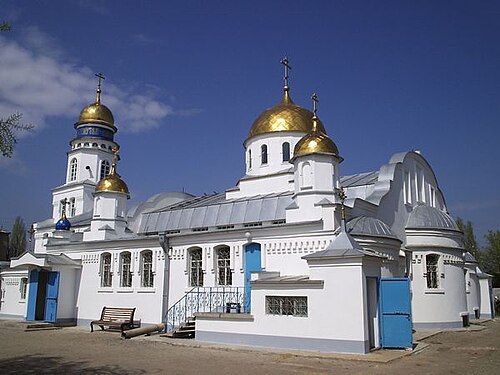
Melitopol is a city located in southeastern Ukraine, within the Zaporizhzhia Oblast (province). It serves as the administrative center of Melitopol Raion (district) and is situated on the banks of the Molochna River, approximately 100 kilometers northeast of the Black Sea. Established in 1784, Melitopol was originally a Cossack settlement and has since grown into a significant urban center, with a population of around 150,000 residents. The city is known for its agricultural contributions, particularly in the production of grains, fruits, and vegetables, owing to the fertile soil in the surrounding region. Melitopol is also referred to as the "Gate to the Crimea," given its strategic location that facilitates access to the Crimean Peninsula.
Historically, the city has experienced various cultural influences, notably with the presence of diverse ethnic groups, including Ukrainians, Russians, Jews, and Greeks. This cultural tapestry is reflected in the city’s architecture, traditions, and culinary offerings. Melitopol has served as a significant transportation hub due to its railway connections and proximity to major highways, making it a crucial point for commerce and trade in southeastern Ukraine. The city's economy is bolstered by agriculture, food processing, and light manufacturing industries. Furthermore, Melitopol is home to various educational institutions and cultural landmarks, including museums, theaters, and parks, which contribute to its local identity and community life.
In recent years, Melitopol has been in the spotlight due to geopolitical tensions and conflicts involving Ukraine. As of 2022, the city was captured by Russian forces during the ongoing conflict, which has led to profound changes in its political landscape and daily life for its residents. Humanitarian issues and the challenges of occupation have come to the forefront, with local and international efforts focusing on humanitarian assistance and support for the citizens of Melitopol. Despite these challenges, the city's resilience and historical significance continue to shape its identity as it navigates a complex and changing socio-political environment.
Facts about Melitopol
- Melitopol is known as the 'Gateway to the Sea of Azov' due to its strategic location as a transportation hub between the inland and the coast.
- The city has a rich history dating back to its founding in 1770 and has been influenced by various cultures, including Ukrainian, Russian, and Crimean Tatar.
- Melitopol is famous for its production of watermelons and is often referred to as the 'Watermelon Capital of Ukraine.'
- The city's architecture features a mix of Soviet-era buildings and traditional Ukrainian structures, making it distinct among other Ukrainian cities.
- Melitopol hosts the Melitopol Museum of Local Lore, which is known for its extensive collection of artifacts related to the history and culture of the region.
- In 1941, during World War II, Melitopol was occupied by German forces and later liberated by Soviet troops, marking it as a site of significant military history.
- The city celebrates an annual Watermelon Festival, which attracts visitors and celebrates local agricultural traditions.
- Melitopol has a diverse industrial base, including food processing, machinery, and chemical industries, which differentiates its economy from other cities.
- The Melitopol region is home to numerous archaeological sites, including ancient Greek settlements and Scythian burial mounds, underscoring its historical significance.
- The city's green parks and recreational areas, such as the park named after the 150th anniversary of Melitopol, provide a unique urban landscape compared to many other urban areas in Ukraine.