Mérida, Spain
- 59,352 people
- 17 places to visit
- 38.9191, -6.3408
Places to Visit (17)
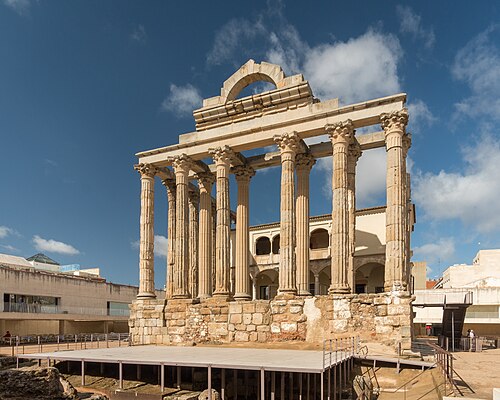
Mérida, the capital of the province of Badajoz in southwestern Spain, is a historical city renowned for its rich Roman heritage and archaeological significance. Founded in 25 BC by the Roman Emperor Augustus as Emerita Augusta, Mérida was strategically located on the banks of the Guadiana River and served as a major administrative center in Roman Hispania. The city has well-preserved monuments that reflect its ancient glory, earning it a designation as a UNESCO World Heritage Site in 1993. Among its most notable structures are the Roman Theatre, built in 15 BC and still used today for performances, and the adjacent Amphitheatre, which hosted gladiatorial games and can accommodate about 15,000 spectators. Other significant sites include the Temple of Diana, the Roman bridge known as the Puente Romano, and the extensive remains of the aqueduct.
Mérida's modern-day charm blends seamlessly with its historical significance, making it a vibrant city for both residents and visitors. The population is approximately 60,000, contributing to a lively cultural scene. The city hosts various festivals throughout the year, including the Festival of Classical Theatre in the Roman Theatre, which showcases performances based on ancient plays. Mérida also offers a range of modern amenities, shops, and restaurants, while maintaining a warm and welcoming atmosphere. The local cuisine reflects the region’s agricultural bounty, featuring dishes such as artisanal cheeses, cured meats, and traditional stews. Nature enthusiasts can explore the nearby Natural Park of Cornalvo, while history lovers can visit the National Museum of Roman Art, which houses an impressive collection of artifacts from the Roman period. With its unique blend of history, culture, and natural beauty, Mérida stands as an enduring testament to Spain's past and a vibrant hub for spectators of its remarkable heritage.
Facts about Mérida
- Mérida is known for its exceptionally well-preserved Roman ruins, earning it a designation as a UNESCO World Heritage Site in 1993.
- The city was founded in 25 BC by the Romans as Emerita Augusta, originally established for retired soldiers from the Roman army.
- Mérida is home to one of the most important Roman theaters in Spain, which could seat up to 6,000 spectators and is still used for performances today.
- The Temple of Diana in Mérida is a remarkable example of Roman architecture; despite being partially in ruins, it remains a distinctive landmark of the city.
- Mérida hosts the Festival Internacional de Teatro Clásico de Mérida, an annual festival dedicated to classical theater, drawing performers and audience members from around the world.
- The city features the Aqueduct of Los Milagros, a partially standing Roman aqueduct that is one of the most iconic symbols of Mérida.
- Mérida is also recognized for its rich collection of archaeological artifacts housed in the National Museum of Roman Art, one of the most important of its kind in Spain.
- The Roman bridge over the Guadiana River is one of the longest surviving Roman bridges in the world, measuring over 790 meters in length.
- Mérida has a significant Moorish influence in its architecture, particularly visible in structures like the Alcazaba, a well-preserved Islamic fortress.
- The city celebrates its Festival of Las Cruces, a unique cultural event where locals decorate crosses throughout the city with flowers, showcasing traditional craftsmanship.