Messina, Italy
- 219,948 people
- 16 places to visit
- 38.1937, 15.5542
Places to Visit (16)
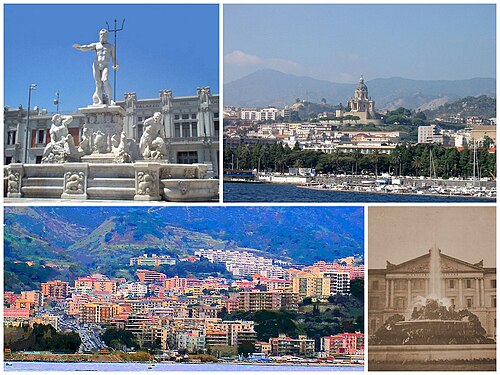
Messina is a vibrant city located on the northeastern tip of Sicily, Italy, positioned strategically along the Strait of Messina. It serves as a key gateway between the island and the mainland of Italy, facilitating trade and transportation. With a history that dates back to ancient times, Messina was originally established by the Greeks in 753 BC and later became an important Roman port. The city has endured significant historical events, including the destruction of an earthquake in 1783, which reshaped its architectural landscape.
Today, Messina is known for its rich cultural heritage, marked by a blend of influences from various civilizations that have ruled the area, including the Byzantines, Arabs, and Normans. This diverse history is evident in its architecture, with notable landmarks such as the Cathedral of Messina, built in the 12th century and renowned for its stunning bell tower featuring one of the largest astronomical clocks in the world. The church was reconstructed after the 1908 earthquake, which devastated the city and resulted in the loss of a significant portion of its population. The local economy is supported by various sectors, including tourism, commerce, and port activities, making it a vital economic hub in Sicily.
Messina also embraces a rich tradition of festivals and events, reflecting the city's lively cultural scene. The annual Varo Festival, celebrating the Assumption of Mary, showcases colorful parades and historical reenactments, drawing visitors from across the region. Additionally, the city is surrounded by natural beauty, with coastal vistas and picturesque landscapes, making it an attractive destination for tourists. Overall, Messina presents a unique blend of history, culture, and natural beauty, making it an essential part of Sicily’s identity.
Facts about Messina
- Messina is known for its iconic Bell Tower and Astronomical Clock, which features a unique performance at noon every day, showcasing moving figurines representing various historical and legendary figures.
- The city's harbor is one of the largest in Italy and has been a strategic port for centuries, playing a crucial role in trade and military operations throughout history.
- Messina was heavily affected by the 1908 earthquake, which led to a significant reconstruction and the establishment of new building codes in the region, making it a notable example of urban recovery.
- The city's cathedral, the Messina Cathedral, is famous for its blend of architectural styles, primarily Norman and Gothic, and houses the remains of Saint Fortunatus, the city's patron saint.
- Messina is the birthplace of the famous Italian composer, Vincenzo Bellini, known for his operas such as 'Norma' and 'La Sonnambula,' which have influenced the Italian opera tradition.
- The 'Festa di Giganti' is a unique annual festival celebrated in Messina, featuring massive, colorful giants carried on the shoulders of participants, which reflects the city's rich folklore and cultural heritage.
- Messina's Astronomical Clock, one of the largest in the world, includes not just the usual chimes but also a representation of the Zodiac and the planets, making it a unique historical landmark in the city.
- The city is also renowned for its production of wine, especially the Zibibbo and other local varieties, with a long tradition of viticulture that distinguishes it from other Italian regions.
- Messina has a vibrant history of multicultural influences, due to its position as a crossroads for trade and migration in the Mediterranean, resulting in a diverse culinary scene and architectural styles.
- The Strait of Messina, which separates Sicily from the Italian mainland, is considered one of the most scenic and important maritime passages in the Mediterranean, enhancing the city's significance in maritime travel.