Minsk, Belarus
- 1,742,124 people
- 16 places to visit
- 53.9006, 27.559
Places to Visit (16)
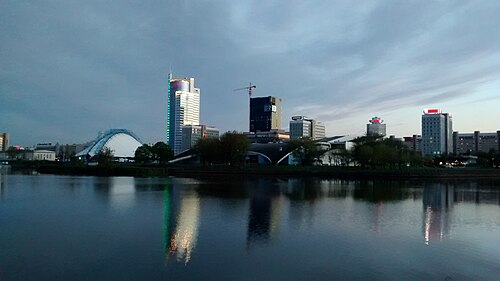
Minsk, the capital and largest city of Belarus, is located in the central part of the country. As of 2023, it has an estimated population of around 2 million people, making it a significant cultural, economic, and political hub in Eastern Europe. The city has a rich history dating back over 900 years, with its first recorded mention in 1067. Historically, Minsk was influenced by various powers, including the Grand Duchy of Lithuania, the Polish-Lithuanian Commonwealth, and the Russian Empire. Today, it is known for its wide boulevards, Soviet-era architecture, and numerous parks, presenting a mix of historical and modern influences.
Minsk is characterized by its impressive public spaces, including Independence Square and Victory Square, which are both central to the city’s civic life. The city’s architecture features a combination of neoclassical and Soviet styles, with landmarks such as the Belarusian State Museum of the Great Patriotic War, which commemorates the country's role in World War II. Additionally, Minsk is home to several higher education institutions, museums, theaters, and cultural centers that attract both local residents and international visitors. The city also boasts a well-developed public transportation system, including buses, trams, and a metro, facilitating easy movement throughout its expansive urban area.
Economically, Minsk is the main center of Belarusian industry, featuring sectors such as machinery, electronics, food processing, and textiles. The city also plays a crucial role in Belarus's information technology sector, with initiatives aimed at fostering growth in startups and tech innovation. Despite its growth and development, Minsk has faced challenges, including political issues and economic dependence on Russia. The city is known for hosting various international events and exhibitions, which contribute to its global presence and cultural exchange. Overall, Minsk reflects a complex blend of historical heritage, modern urban development, and ongoing socio-political dynamics, making it a unique city within Eastern Europe.
Facts about Minsk
- Minsk is the capital and largest city of Belarus, serving as the political, cultural, and economic center of the country.
- The city has a rich history that dates back to the 11th century and has significantly rebuilt itself after being almost completely destroyed during World War II.
- Minsk is home to the National Library of Belarus, an iconic architectural landmark known for its unique diamond-shaped design and one of the largest library collections in the country.
- The city features the largest urban park in Europe, Gorky Park, which offers a wide range of recreational activities and cultural events throughout the year.
- Minsk hosted the Second European Games in 2019, making it the first Belarusian city to host such a large international multi-sport event.
- The architecture in Minsk showcases a mix of Soviet-era styles and modern design, distinct from the more traditional architectural styles found in other Belarusian towns.
- Minsk has a vibrant arts scene, with numerous theaters, galleries, and cultural festivals, including the Minsk International Film Festival 'Listapad'.
- The city’s Independence Square and Victory Square are among the largest squares in Europe, often used for national celebrations and events.
- Minsk has a well-developed public transit system, including an extensive metro network that is one of the fastest in Europe, setting it apart from many other Belarusian cities.
- The city is known for its high literacy rate and educational institutions, including Belarusian State University, which is the oldest and most prestigious university in the country.