Mogadishu, Somalia
- 2,587,183 people
- 11 places to visit
- 2.0371, 45.3379
Places to Visit (11)
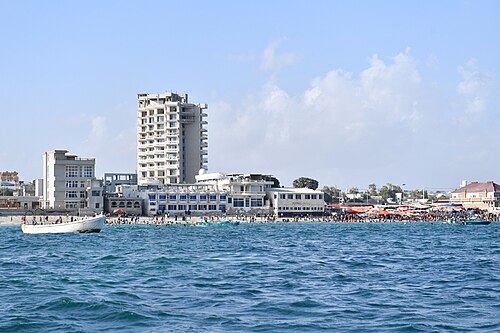
Mogadishu, the capital city of Somalia, is located on the country's southeastern coast along the Indian Ocean. With a population of over two million people, it is the largest city in Somalia and serves as an economic, political, and cultural hub. The city has a rich history dating back to the 10th century when it began as a trading port frequented by merchants from the Middle East, Africa, and Asia. Its strategic position facilitated trade and cultural exchange, fostering the growth of a cosmopolitan society. Mogadishu was known for its impressive architecture, including coral stone buildings and ancient mosques, which exemplified Islamic architecture and the city's historical significance as a center of commerce and learning.
The late 20th century brought significant challenges to Mogadishu, particularly during the Somali Civil War that erupted in the late 1980s and continued through the 1990s. The conflict led to widespread destruction of infrastructure, a breakdown of social order, and a humanitarian crisis as thousands of residents were displaced. Subsequent years saw varying degrees of governance and stability, with the emergence of various factions and warlords. However, in recent years, efforts towards rebuilding and stabilizing the city have gained momentum, supported by international assistance and investments. Initiatives focusing on infrastructure development, public safety, and social services have begun to restore Mogadishu's former vibrancy, although challenges remain, including security concerns and the need for economic development.
Today, Mogadishu is witnessing gradual improvements, with a growing private sector, including small businesses and markets that reflect the entrepreneurial spirit of its residents. The city is home to important institutions, including the Federal Government of Somalia, which has been working to re-establish governance structures. Despite the lingering impacts of past conflicts, Mogadishu is emerging as a resilient city, with a rich cultural heritage that includes traditional Somali music, poetry, and cuisine. The ongoing development and the efforts of its people signal a hopeful future for Mogadishu as it seeks to overcome its turbulent past and build a stable society.
Facts about Mogadishu
- Mogadishu is the capital and largest city of Somalia, serving as the political, economic, and cultural hub of the country.
- The city has a rich history dating back to the 10th century when it was a significant port city in the Indian Ocean trade routes.
- Mogadishu is known for its historic architecture, including the 19th-century Arba-mina Hotel and the iconic Imam Ali Mosque.
- The city's central district, Hamar Jajab, features colonial-era buildings that reflect its past as a Somali, Arab, and Italian trading port.
- Mogadishu boasts some of the most beautiful beaches in Somalia, including Lido Beach and Jazeera Beach, popular destinations for both locals and visitors.
- The city has a diverse population with various ethnic groups, and it is home to numerous cultural festivals and religious events throughout the year.
- Mogadishu is recognized for its unique Somali cuisine, which includes dishes like injera, camel meat, and various seafood delicacies.
- In the 1970s and 1980s, Mogadishu was known for its vibrant art scene, producing notable Somali artists, musicians, and poets.
- The local market, Bakara Market, is one of the largest in the country, serving as a key commercial center where goods from across the region can be found.
- Mogadishu has witnessed significant rebuilding efforts since the Somali Civil War, with many international organizations and governments supporting reconstruction initiatives.