Montevideo, Uruguay
- 1,270,737 people
- 16 places to visit
- -34.9055, -56.1851
Places to Visit (16)
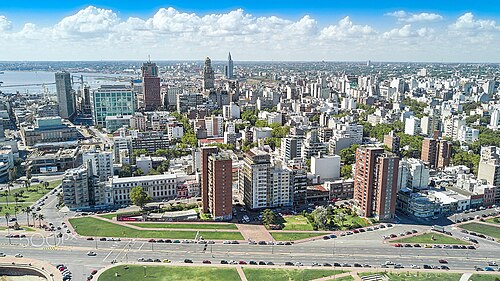
Montevideo, the capital and largest city of Uruguay, is situated on the southern coast of the country, along the banks of the Río de la Plata. With a population of approximately 1.3 million residents, it accounts for nearly half of Uruguay's total population. Founded in 1724 by the Spanish explorer Bruno Mauricio de Zabala, Montevideo has evolved into a key political, cultural, and economic center in the region. The city's architecture reflects its rich history, showcasing a mix of colonial, Art Deco, and modern styles. Important landmarks include the iconic Solís Theatre, one of South America's oldest theatres, and the historic Ciudad Vieja, the old town, where cobblestone streets are lined with various shops, cafes, and art galleries.
Economically, Montevideo serves as the main hub for commerce, finance, and industry in Uruguay. The Port of Montevideo is one of the most important ports in the region, facilitating international trade and maritime transport. The city's economy is diverse, with key sectors including services, agriculture, and manufacturing. Montevideo is also known for its political significance, as it hosts the headquarters of several regional organizations, including the Southern Common Market (Mercosur). Culturally vibrant, the city boasts a lively arts scene, celebrating its distinctive musical heritage through genres like Candombe and Tango. Annual events such as the Montevideo Carnival highlight this cultural richness, drawing visitors from around the world. The city's commitment to education is evident in its numerous institutions, including the University of the Republic, one of the oldest and largest universities in the country.
Montevideo also places a strong emphasis on green spaces and urban parks, contributing to its residents' quality of life. The Rambla, a long waterfront promenade, stretches for 22 kilometers, offering picturesque views of the river and a popular space for walking, cycling, and socializing. The city's blend of tradition and modernity, coupled with its welcoming atmosphere, makes Montevideo a unique destination. Its extensive cultural offerings, combined with a high standard of living and a strong sense of community, allow the city to thrive amidst the dynamic flow of contemporary life and historical legacy.
Facts about Montevideo
- Montevideo is the capital and largest city of Uruguay, housing about 40% of the country's population.
- The city was founded in 1724 by the Spanish and has a rich colonial history visible in its architecture.
- Montevideo's Ciudad Vieja (Old Town) features several historic buildings and landmarks, including the Solis Theatre, one of the oldest theaters in South America.
- The city has the longest coastline of any city in the world, stretching along the Rambla, which is over 22 kilometers long.
- Montevideo is known for its vibrant cultural scene, with numerous festivals, concerts, and events, including the Montevideo Carnival, one of the largest carnivals in the world.
- It is home to the Mercado del Puerto, a popular market that showcases Uruguayan cuisine, especially the famous 'asado' (barbecue).
- Montevideo boasts a mix of architectural styles, including Art Deco, Neoclassical, and Modernist buildings, making it unique compared to other Uruguayan cities.
- The city hosts several universities and is recognized for its high level of education and literacy rates compared to other regions.
- Montevideo has a rich football culture and is home to historic clubs such as Nacional and Peñarol, which have a longstanding rivalry known as the Clásico.
- The city is recognized as a UNESCO City of Music, reflecting its commitment to music and the arts, which sets it apart from smaller towns in Uruguay.