Moscow, Russian Federation
- 10,381,222 people
- 16 places to visit
- 55.7558, 37.6173
Places to Visit (16)
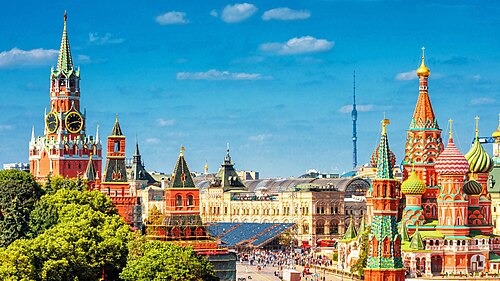
Moscow, the capital city of the Russian Federation, is one of the most significant cultural, political, and economic centers in the country and Europe. Founded in 1147, it has grown from a small town to a sprawling metropolis with a population exceeding 12 million, making it the most populous city in Europe. Moscow is renowned for its rich history, which is encapsulated in its intricate architecture ranging from the iconic red-brick walls of the Kremlin to the colorful domes of St. Basil's Cathedral. The city's transport system is extensive, with the Moscow Metro being one of the world's largest and most efficient, known for its ornate and artistically decorated stations that reflect the city's historical and cultural significance.
The economy of Moscow is robust, contributing a significant portion to Russia's overall GDP. The city is a hub for various industries, including finance, technology, and tourism. Home to numerous multinational corporations, it has earned a reputation as a global financial center. Additionally, Moscow's cultural scene is vibrant, featuring numerous theaters, museums, galleries, and concert halls. Notable institutions include the Bolshoi Theatre and the Pushkin State Museum of Fine Arts. The city hosts several annual events, such as the Moscow International Film Festival and the Circle of Light Festival, which showcase art and innovation, attracting both domestic and international visitors. Moscow balances its modernity with traditions, evident in its fast-paced urban life alongside centuries-old customs. This dynamic interplay makes the city a focal point of Russian heritage and a reflection of contemporary global trends.
Facts about Moscow
- Moscow is home to the famous Kremlin, a UNESCO World Heritage site and the official residence of the President of Russia, symbolizing the country's political power.
- The city features the iconic Red Square, where significant historical events have occurred, including military parades and public gatherings.
- Moscow is the largest city in Russia and serves as its economic, political, and cultural center, with a population of over 12 million people.
- The Moscow Metro is known for its stunning architecture and is considered one of the most efficient subway systems in the world, featuring lavishly decorated stations.
- Moscow has a rich theater tradition, with the Bolshoi Theatre being one of the most famous opera and ballet theaters globally, renowned for its performances and historic significance.
- The city was the heart of the Soviet Union and played a pivotal role during the Cold War, symbolized by landmarks such as the now-demolished Palace of the Soviets and the monument to Peter the Great.
- Moscow hosts numerous museums, including the State Tretyakov Gallery, which houses an extensive collection of Russian fine art, making it a cultural treasure of the country.
- The city is famous for its diverse architectural styles, ranging from historic structures like St. Basil's Cathedral with its colorful onion domes to modern skyscrapers in the Moscow International Business Center.
- Moscow has been the site of significant historical events, including the October Revolution in 1917, which led to the establishment of the Soviet government.
- Moscow celebrates various cultural festivals, including the annual Circle of Light festival, showcasing stunning light installations and projections across the city.