Münster, Germany
- 270,184 people
- 17 places to visit
- 51.9607, 7.6261
Places to Visit (17)
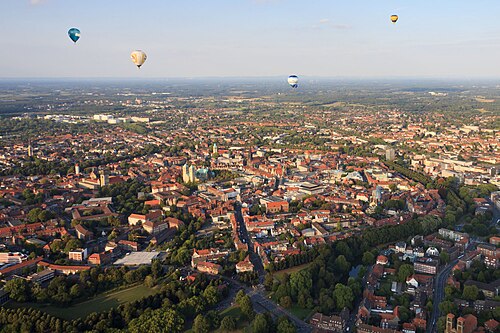
Münster is a picturesque city located in the North Rhine-Westphalia region of Germany, known for its rich history, vibrant cultural scene, and as a hub for education and research. Founded in 793 as a bishopric, Münster has deep-rooted connections to the ecclesiastical authority and played a significant role during the Reformation. The city is best known for the Peace of Westphalia, concluded in 1648, which ended the Thirty Years' War and helped establish the principles of modern state sovereignty. Throughout the centuries, Münster has been characterized by its striking architecture, including the Gothic-style St. Paul's Cathedral and the historic Prinzipalmarkt, a square lined with charming gabled houses and arcades that exemplify the city's medieval heritage.
Münster is also a vibrant university town, home to the University of Münster, which was established in 1780 and ranks among the largest and most prestigious universities in Germany. With a large student population, the city has a youthful atmosphere marked by an array of cultural events, including festivals, concerts, and exhibitions. The city's commitment to sustainability is noteworthy, as Münster has earned recognition for its environmental initiatives, including comprehensive cycling infrastructure, which encourages residents and visitors alike to explore its scenic canals, parks, and green spaces. The local cuisine reflects regional specialties, featuring dishes such as Westphalian ham and the famous potato-based Münsterländer pie, highlighting the city's culinary heritage.
Münster's strong sense of community, combined with its historical significance and vibrant cultural life, makes it an attractive destination for tourists and residents. The city is noted for its commitment to preserving cultural heritage while engaging in contemporary artistic expression. With its picturesque landscapes, rich historical context, and a lively atmosphere, Münster offers a unique blend of tradition and modernity, making it a compelling place to visit or study.
Facts about Münster
- Münster is known as the 'City of Westphalia' and is famous for being the site of the signing of the Peace of Westphalia in 1648, which ended the Thirty Years' War.
- The Prinzipalmarkt is Münster's historical market square, renowned for its picturesque gabled houses and the Gothic-style St. Lamberti Church, which features a unique cage once used to display the bodies of Anabaptist leaders.
- Münster is home to the oldest university in North Rhine-Westphalia, the University of Münster, founded in 1780, and is recognized for its research and academic excellence.
- The city has a notable concentration of bicycles, with over 500,000 bikes registered, making it one of the most bicycle-friendly cities in Germany.
- Münster hosts the annual 'Send,' one of the largest fairs in North Rhine-Westphalia, which attracts millions of visitors each year and features rides, games, and local food specialties.
- The Allwetterzoo Münster is unique for its all-weather design, allowing visitors to explore various habitats regardless of the weather conditions.
- Münster's historic district was extensively rebuilt after WWII, resulting in a blend of medieval architecture and modern design, distinguishing it from many other German cities that retained their original structures.
- The city's 'Münsterland' region is famous for its many castles and manors, with scenic landscapes that include picturesque waterways and farmlands.
- Münster is recognized for its vibrant cultural scene, with various festivals, such as the 'Münsterland Festival', celebrating regional arts, culture, and cuisine.
- In 2014, Münster was awarded the title of 'Germany's Most Liveable City,' highlighting its high quality of life, including its parks, cultural amenities, and community spirit.